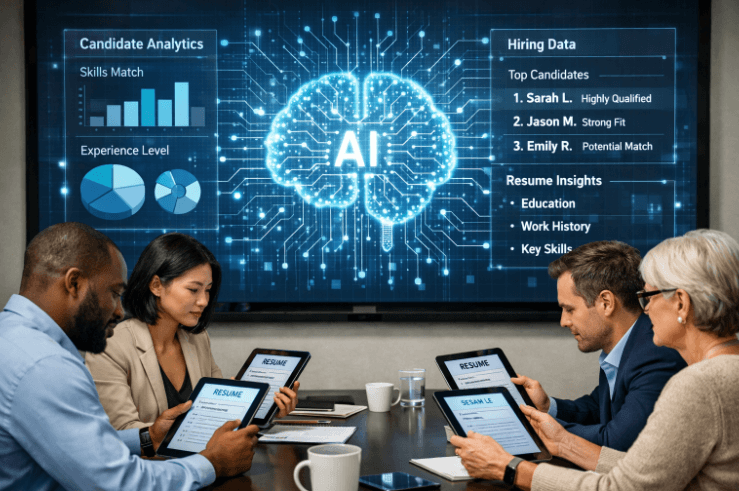
Artificial Intelligence (AI) is revolutionizing the hiring landscape, transforming how companies attract, assess, and onboard talent. This shift brings both opportunities and challenges for employers and job seekers alike. The 2026 AI in Hiring Report by Greenhouse, a leading hiring platform, provides comprehensive insights into these transformations. Greenhouse specializes in AI-driven recruitment solutions, offering tools that enhance efficiency and fairness in the hiring process.
AI’s Role in Modern Recruitment
AI technologies are increasingly integrated into recruitment processes, automating tasks such as resume screening, candidate matching, and even initial interview stages. This automation enables companies to efficiently process large volumes of applications, reducing time-to-hire and operational costs. For instance, AI-driven platforms can analyze resumes to identify candidates whose skills align closely with job requirements, streamlining the selection process.
Balancing Efficiency with Fairness
While AI offers significant efficiencies, it also introduces challenges related to fairness and transparency. Algorithms trained on historical data may inadvertently perpetuate existing biases, leading to unfair hiring practices. Ensuring that AI systems are designed and monitored to promote equitable outcomes is crucial. Transparency in how AI tools make decisions is essential to maintain trust among candidates and compliance with employment regulations.
Redefining Entry-Level Positions
The adoption of AI is prompting companies to reevaluate entry-level roles. Routine tasks traditionally assigned to junior employees are increasingly automated, leading employers to seek candidates with advanced skills and the ability to oversee AI systems. This shift requires job seekers to focus on continuous learning and adaptability to remain competitive in the evolving job market.
Emphasizing Skills Over Credentials
As AI reshapes job functions, there’s a growing emphasis on practical skills over formal qualifications. Employers are prioritizing candidates who demonstrate problem-solving abilities, adaptability, and proficiency with AI tools. This trend encourages job seekers to acquire relevant skills through various means, including online courses and practical experience, rather than relying solely on traditional educational pathways.
See also: Modern Home Remodeling Trends for 2026
Preparing for an AI-Driven Job Market
To thrive in an AI-influenced job market, individuals should focus on developing both technical and soft skills. Understanding how AI tools function and how they can be applied within their respective industries is becoming increasingly important. Additionally, cultivating skills that AI cannot easily replicate, such as emotional intelligence, creativity, and strategic thinking, will provide a competitive edge.
The Changing Role of Human Resources Professionals
Human resources professionals are also experiencing a transformation in their daily responsibilities. Rather than focusing solely on manual resume sorting and initial candidate screenings, HR specialists are increasingly leveraging AI to produce more accurate talent pools and shortlist best-fit candidates. This shift allows HR teams to spend more time on strategic initiatives, such as employer branding, employee engagement, and the design of inclusive workplaces. As AI takes over repetitive administrative tasks, HR professionals can use data-driven insights to guide workforce planning and advise leadership teams on evolving talent needs.
Furthermore, HR teams are at the forefront of implementing guardrails for the ethical use of AI in hiring. They are tasked with monitoring algorithm outputs, ensuring that outcomes align with company values, and continually updating practices to remain compliant with legal and regulatory changes. This responsibility highlights the importance for HR practitioners to regularly acquire new technological competencies and stay informed about the latest developments in AI ethics and employment law.
Legal and Regulatory Considerations
The integration of AI into recruitment processes raises numerous legal and regulatory considerations. Various governments and regulators around the world are paying closer attention to how AI hiring tools are developed and deployed, responding to concerns about data privacy, discrimination, and fairness. For example, the European Union’s General Data Protection Regulation (GDPR) protects the privacy rights of job applicants, while in the US, states like Illinois and New York have enacted laws requiring greater transparency in the use of AI in hiring.
Employers must ensure that their AI hiring systems comply with evolving legal frameworks or risk significant penalties and reputational damage. Regular audits and assessments of AI-driven processes help organizations mitigate legal risks and reinforce their commitment to responsible technology adoption. As regulations evolve, businesses must remain agile, ready to adapt hiring practices and transparency measures accordingly.
The Global Perspective on AI in Recruitment
The adoption and advancement of AI in recruitment is not limited to any one particular country or region. Multinational companies are driving innovation, integrating AI hiring platforms to remain competitive in attracting top global talent. For recruitment teams operating across different geographic markets, understanding regional nuances, cultural expectations, and legal mandates becomes critical.
AI can be configured to screen candidates in multiple languages, identify transferable skills across borders, and help remove geographical barriers for remote work opportunities. As globalization continues, AI-powered recruitment tools will further support diverse and distributed workforces, enabling organizations to tap into a broader range of talent.
Looking Ahead: The Future of AI in Hiring
As AI continues to evolve, so too will its impact on hiring processes. Future advancements may include more sophisticated assessments of soft skills, advanced video interviewing techniques that utilize AI to assess emotional cues, and personalized onboarding experiences tailored to each new hire. The challenge for organizations will be to balance innovation with the need for human-centric processes that prioritize fairness, dignity, and opportunity for all.
Conclusion
AI is undeniably transforming the hiring process, offering efficiencies and new approaches to talent acquisition. However, this evolution requires careful consideration of ethical implications and a commitment to fairness. Both employers and job seekers must adapt to this changing landscape by embracing continuous learning and focusing on the unique value that human skills bring to the workplace.