Key Takeaways
- Review the roof before reviewing panel models or projected savings.
- Use a full year of electric bills to understand seasonal energy needs.
- Account for heat, humidity, wind, lightning, and salt air in system planning.
- Battery storage can support essential loads during outages, but it is optional.
- Compare proposals by production estimates, equipment, warranties, and project scope, not price alone.
Planning for solar panels starts well before choosing equipment. A useful evaluation considers the condition of the roof, household electricity habits, storm exposure, utility requirements, and whether backup power is a real priority.
Florida receives abundant sunshine, but similar-looking homes can have very different solar results. Shade, roof orientation, roof age, air-conditioning demand, and the hours when a household uses electricity all affect whether a proposed system fits the property.
Why Florida Homes Are Considering Solar
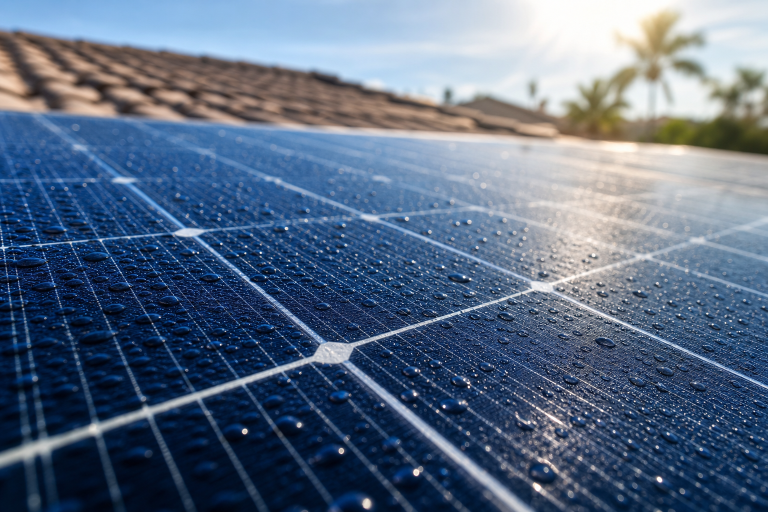
Photovoltaic panels convert sunlight into direct-current electricity, which an inverter converts into usable alternating current. Homeowners may consider solar to offset daytime grid use, reduce exposure to fluctuating electricity costs, or increase their use of renewable energy. Still, sunlight alone does not guarantee the same output from every roof.
Check The Roof First
Solar equipment may remain on a roof for decades, so a roof with limited remaining life deserves attention first. Check for leaks, damaged shingles or tiles, soft decking, lifted materials, prior storm damage, and shade from trees, vents, chimneys, or nearby structures. Confirm that planned attachments will not conflict with the roofing warranty.
Before requesting proposals, determine the roof installation date, gather repair records, arrange an inspection if the condition is uncertain, and decide whether the needed roof work should happen first. A qualified solar contractor can assess the proposed layout, but a roofing professional should address existing roof concerns independently.
Review Your Electricity Use
One monthly bill rarely tells the full story. Review at least 12 months of kilowatt-hour use to capture heavy summer air-conditioning demand as well as lower-use months. Note planned changes, such as an electric vehicle, pool pump, workshop equipment, addition, or electric water heater. It is also helpful to identify when energy is used, since high daytime and evening consumption can lead to different system and battery decisions.
Plan For Florida Weather
Florida conditions influence both design and maintenance. High temperatures can reduce panel output, while heavy rain and humidity make sound flashing, sealing, and drainage important. Coastal homes may need equipment and mounting choices suited to salt-air exposure. Lightning protection, surge protection, local wind-load rules, and hurricane-resistant mounting details should be addressed before installation.
Panels by themselves generally do not keep a home powered when the utility grid fails. Grid-connected systems are designed to shut down during an outage for worker safety. Backup power requires compatible equipment that isolates the home safely from utility lines.
Choose The Right System Size
Panel wattage, total system capacity, and annual production are related but different measures. A 10-kilowatt system indicates capacity, while annual kilowatt-hour production depends on the roof’s direction and pitch, shading, weather, panel temperature, inverter losses, and debris buildup. A larger system is not automatically a better fit if the roof is constrained or utility rules limit exports.
For a starting estimate, a fictional household using 14,400 kilowatt-hours per year might begin by asking how much of that annual use a solar array could reasonably offset. The final answer should use site-specific modeling rather than a rule of thumb. Tools such as NREL’s PVWatts calculator can help homeowners explore preliminary production scenarios, but estimates are not guarantees.
Decide If Battery Storage Fits
Batteries store electricity for later use and can support selected loads during outages. They may be worth considering for homes with frequent outages, essential medical equipment, refrigeration needs, security systems, or substantial evening electricity use. Capacity indicates how much energy a battery can store, while its power rating affects how many and which appliances it can run at one time.
Start by listing essential circuits. Common priorities include a refrigerator, internet equipment, selected lights, medical devices, security equipment, garage-door controls, and charging outlets. Whole-home backup can require considerably more capacity and electrical planning than an essentials-only setup.
Understand Permits And Utility Rules
Residential solar projects commonly require local permits, inspections, and utility interconnection approval. Check requirements from the city or county, electric utility, and homeowners association, where applicable. Typical documents include a site plan, roof layout, electrical diagram, equipment specifications, structural information, permit forms, and inspection records. Florida homeowners can also review the state’s electricity profile and generation data for a broader context on electricity generation and use.
Compare Proposals With Care
Compare written proposals line by line rather than focusing solely on a headline price. For each option, record the following:
- Total system capacity and estimated annual production.
- Panel, inverter, battery, monitoring, and mounting equipment.
- Whether permits, inspections, interconnection, and structural work are included.
- Labor warranty and product warranty terms, including exclusions.
- Expected payment schedule, cancellation terms, and responsibility for corrections.
- Whether roof repairs, electrical upgrades, panel removal, or battery work cost extra.
Plan For Maintenance
Solar panels have few moving parts, but periodic attention is still useful. Monitor production for sudden drops, keep permits and warranty records, and visually inspect the array after major storms. Pollen, dust, bird droppings, and coastal salt can reduce output in some settings. Roof repairs may require panels to be removed and reinstalled by appropriately qualified professionals.
Solar Panels In Florida Homes: A Checklist For Roofs, Power Bills, And Backup Needs
See also: Loot Boxes Under European Law
Common Questions
Do solar panels work on cloudy days?
Yes. Panels can produce electricity from indirect sunlight, although output generally falls when cloud cover reduces available light.
Does a home need a south-facing roof?
No. Other roof directions can work well, depending on shade, roof angle, electricity use, and the system design.
Is a battery required?
No. Batteries are optional. Their value depends on outage risks, essential loads, evening use, and household goals.
Conclusion
A thoughtful solar plan begins with a sound roof and accurate energy records. By considering weather exposure, realistic production estimates, backup priorities, permits, and maintenance before signing an agreement, Florida homeowners can make a more informed decision about whether solar is a good fit for their property in 2026.