
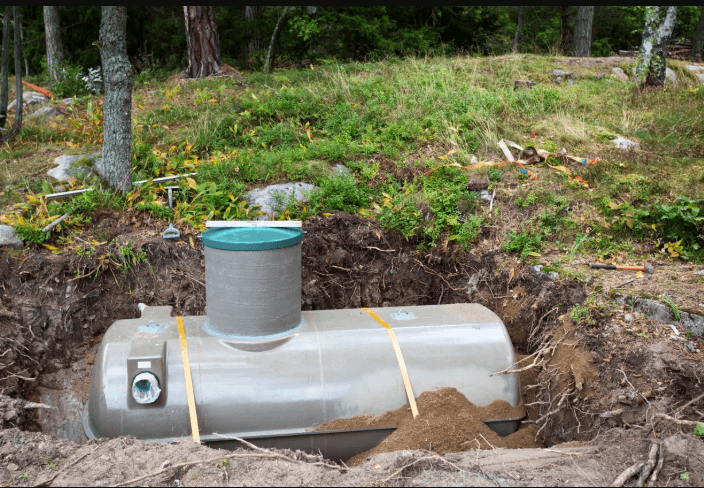
Most homeowners spend a lot of time thinking about what’s happening inside their homes. A leaky faucet gets fixed. A running toilet gets attention. But the pipes buried several feet beneath the lawn? Those tend to get ignored until something goes seriously wrong.
The quiet reality is that underground plumbing failures are happening across the country, and most people don’t find out until sewage backs up into their basement or a section of their yard sinks without explanation. By that point, the damage has usually been building for months, sometimes years.
The Pipe Problem Hiding Under Your Feet
Plumbing excavation isn’t something most people think about until they’re standing in a flooded basement wondering what went wrong. But understanding why underground lines fail and how failure actually progresses makes the whole situation less overwhelming.
Much of the residential plumbing installed before the 1980s used clay, cast iron, or Orangeburg pipe materials that were standard at the time but were never designed to last indefinitely. Clay pipe cracks under pressure. Cast iron rusts from the inside out. Orangeburg, made from compressed tar and wood pulp, essentially softens and collapses over time.
According to the American Society of Civil Engineers, the U.S. receives a D+ grade for its overall water infrastructure. That’s not just a public utility problem. Millions of private residential sewer lines are made from the same era of materials and are in the same condition.
When these pipes begin to fail, the deterioration is usually internal. There’s nothing visible from the surface. The lawn looks fine. The drains seem to be working mostly. And so the problem grows unnoticed.
Tree Roots Are Not Your Friend
One of the most common causes of underground pipe collapse is tree root intrusion. Roots naturally seek out moisture, and a sewer line is essentially a slow leak of warm, nutrient-rich water. Even a hairline crack gives roots a way in.
Once inside, roots don’t stay small. They expand over seasons, slowly filling the pipe, catching debris, and eventually blocking flow entirely. What started as a partial clog becomes a complete obstruction or worse, a pipe that splits under the pressure.
If you have mature trees anywhere near your home, and your sewer line is older, root intrusion is not a remote possibility. It’s a realistic concern worth taking seriously.
Warning Signs That Deserve Attention
The tricky part about underground pipe problems is that the warning signs are easy to explain away. A slow drain feels like a minor annoyance. A smell in the yard seems like it could be anything. A patch of unusually lush, green grass looks like a good thing.
But these are the signals that experienced plumbers associate with failing underground lines-
- Gurgling sounds from drains or toilets after flushing.
- Multiple slow drains throughout the house at the same time.
- Sewage odor coming from the yard or lower-level drains.
- Soft or soggy ground in one area of the yard, even when it hasn’t rained.
- Cracks appearing in your foundation or driveway near where pipes run.
None of these individually means a catastrophe is imminent. But together, they point to something that needs to be looked at underground, not just at the drain opening.
See also: Understanding Business Loan Options for Entrepreneurs
Why Surface-Level Fixes Don’t Always Work
When a homeowner calls about slow drains, the first step is usually a camera inspection. A plumber runs a waterproof camera through the line to see what’s actually happening. This is where the real picture comes into view.
In many cases, what looks like a simple clog is actually a structurally compromised pipe. Snaking or jetting can clear a blockage temporarily, but if the pipe itself is cracked, collapsed, or has been invaded by roots, the problem will usually return within months.
This is when plumbing excavation becomes the conversation. Excavation isn’t the first option anyone wants to discuss, but for pipes that have genuinely failed, it’s often the only lasting solution. Patching a collapsed clay line from the inside is like putting tape over a rotten board. It buys time, not a fix.
Plumbing excavation involves carefully digging to access the damaged section of pipe, removing what’s failed, and replacing it with modern materials like PVC, which is more durable and far more resistant to root intrusion. The process is more involved than a drain cleaning, but so is the problem it solves.
If you’re hearing about excavation for the first time and want to understand what it actually involves, the team at Drain Guys has a clear breakdown. Click here to see what the process looks like from start to finish.
What Happens If You Wait
Home insurance claims related to water and sewer damage have been climbing steadily. The average claim now exceeds $11,000, and that figure doesn’t include landscaping restoration, foundation repair, or the cost of temporary displacement if the situation is difficult.
A pipe that fails gradually gives homeowners options. A pipe that collapses suddenly doesn’t. When raw sewage reaches a basement or saturates soil near a foundation, the damage goes beyond plumbing; it touches structural integrity, indoor air quality, and resale value.
Plumbing excavation, while not a small undertaking, is far less disruptive and costly than dealing with the aftermath of a full pipe collapse that went unaddressed for too long. Most homeowners who go through the process say the hardest part was waiting because once they understood the scope of the damage, the decision to proceed with plumbing excavation was straightforward.
Summary
The plumbing beneath your yard was built to last but not forever. Clay, cast iron, and older pipe materials are failing in homes across the country, often without any visible warning until something goes wrong at the surface. Tree roots, soil movement, and simple age all accelerate the process.
If your drains are slow, your yard has soft spots, or your home is more than 30 years old, it’s worth having someone look at what’s happening underground. Understanding when plumbing excavation is the right answer and what that process involves can save you from a far more expensive and stressful situation down the road.
The pipes you never think about are often the ones that deserve the most attention.
