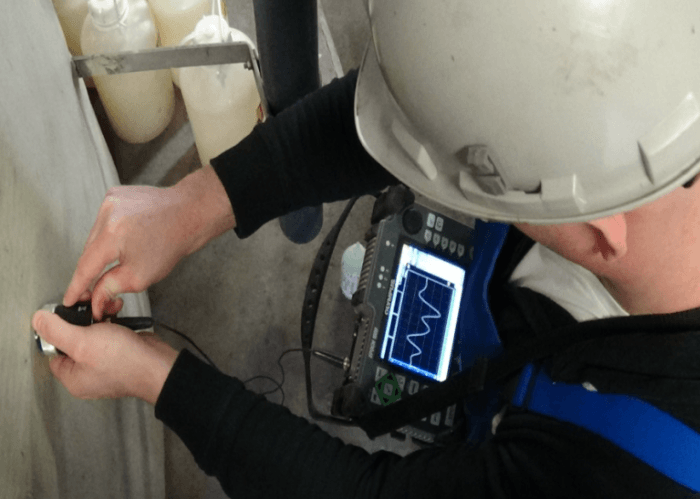
Hiring a tank inspection company isn’t complicated — but hiring the right one requires asking a few smart questions upfront. Whether you’re managing an above-ground petroleum storage facility, a municipal water system, or an industrial process tank, the fundamentals of a good inspection engagement are the same.
This guide walks you through everything: what to expect, what to demand, and how to avoid the most common mistakes operators make when sourcing inspection services.
Step 1: Know What Type of Inspection You Actually Need
“Tank inspection” covers a wide spectrum of activities. Before reaching out to any company, clarify which of the following you need:
Routine condition assessment: A periodic check of tank condition, typically documented for internal maintenance planning and regulatory compliance records.
API 653 formal inspection: is a check that follows the rules of API 653. A certified inspector does this check. The inspector writes down what they find. This report is important for meeting the rules and for insurance.
Fitness-for-service evaluation: is when engineers look at a tank that’s not in perfect shape. They want to know if the tank is safe to use. They figure out under what conditions the tank can be used and for how the API 653 formal inspection and fitness-, for-service evaluation can be used together.
A pre-purchase inspection: is when someone checks the condition of a tank or facility before they buy it. They do this to find any problems that the seller did not tell them about. This check helps the buyer know if the deal is fair and if they will have to pay for any problems after they buy the tank or facility. The pre-purchase inspection is important for the buyer to make a decision.
Emergency inspection: Rapid mobilization following an incident, suspected release, or anomalous operating condition.
Environmental compliance inspection: An assessment focused specifically on regulatory compliance, release detection, and environmental risk factors.
Knowing what you need before you call means you’ll get accurate quotes, appropriate inspectors, and reports that actually serve your purpose.
Step 2: Verify API 653 Certification
For above-ground storage tanks, API 653 tank inspection companies bring the credentials that matter most. The API 653 certification is held by individual inspectors, not just companies so ask for the name and certification number of the inspector who will actually perform your assessment.
You can verify API certifications directly through the American Petroleum Institute’s certification registry. This takes about two minutes and tells you whether the credential is current, lapsed, or provisional.
Don’t skip this step. An inspection conducted by an uncertified individual has no standing under API 653, regardless of how thorough the work appeared.
Step 3: Understand What Water Tank Inspection Services Should Include
For water storage applications, water tank inspection services need to address concerns specific to water system integrity:
Potable water tanks require inspection of NSF/ANSI 61-certified interior coatings, inlet and outlet conditions, overflow and vent screen integrity, access hatch seals, and any conditions that could introduce contamination into the water supply.
Fire suppression tanks require confirmation of fill capacity pump suction line condition and the absence of corrosion or coating failure that could compromise fire flow delivery.
Industrial process water tanks should be assessed for coating compatibility, with stored water chemistry, sediment levels and any corrosion driven by water conditions (high chloride, low pH biological activity).
A water tank inspection report that doesn’t address these domain-specific factors is incomplete, regardless of how detailed the structural data looks.
Step 4: Ask About Reporting Quality
Inspection reports vary enormously in quality. What you want from a tank inspection company is a report that functions as a decision-support document, not just a record of what was observed.
A high-quality inspection report includes:
- Photographic documentation with timestamps and location references
- Measured data (thickness readings, coating DFT measurements, settlement measurements) rather than qualitative descriptions alone
- Risk-ranked findings that distinguish between safety-critical issues, compliance concerns, and maintenance items
- Remaining life estimates for key components based on measured corrosion rates
- Specific recommendations with recommended timelines for action
- Compliance status relative to applicable standards (API 653, SPCC, state regulations)
Ask for a sample report before you hire. If what you receive is vague, photo-light, or heavy on boilerplate, the actual deliverable will likely reflect the same limitations.
Step 5: Find Water Tank Inspection Companies Near Me, Smartly
Searching for water tank inspection companies near me is a reasonable starting point, but refine your criteria beyond geography:
- Filter for companies with demonstrated experience in your tank type and service application
- Prioritize companies that can provide industry references, not just general testimonials
- Ask whether the inspection will be performed by company employees or subcontracted to third parties
- Confirm that the company’s insurance covers both the inspection activity and any environmental liability that could arise from their work
The best tank inspection services providers will often travel to your location don’t artificially limit your options to the closest result in a search engine if a better-qualified company is two hours away.
What Environmental Inspection Services Add to the Picture
Environmental inspection services do a lot more than the usual tank check. They look at the picture. This means they check the soil and water near the tanks to see if they are okay. They also check the containment to make sure it is working right. They test the release detection system to see if it is doing its job. The people doing the inspection also check to see if everything is okay with the rules and regulations. Environmental inspection services are important because they help keep the environment safe.
For facilities subject to EPA SPCC requirements, state UST/AST regulations, or environmental permit conditions, integrating environmental inspection with your structural tank assessment gives you a complete, defensible compliance picture.
See also: Understanding Business Loan Options for Entrepreneurs
FAQ: Hiring a Tank Inspection Company
Q: How do I verify that an inspectors API 653 certification is current?
I check the American Petroleum Institutes registry using the inspector’s name or certification number. It takes two minutes to do this. I always ask for details rather than a general company assurance because work done by someone with a lapsed API 653 certification means nothing under the standard.
Q: What should a pre-purchase tank inspection include?
A pre-purchase tank inspection should include the floor and shell thickness, the coating condition, weld integrity, foundation checks and a look through repair records of the tank. I want to know what is wrong with the tank and how much life is left in the tank. What repairs will cost before I sign anything for the tank.
Q: Is it better to hire a national tank inspection company?
The location of the tank inspection company matters less than the experience of the tank inspection company. What actually counts is whether they have worked with my tank type, my product and my regulatory environment. A qualified tank inspection company two hours away is better than a qualified one around the corner.
Q: What is the difference between an inspection report and a fitness-for-service evaluation?
An inspection report documents what was found during the inspection of the tank. A fitness-for-service evaluation takes that data and answers whether the tank can keep running and for how long. I need a fitness-for-service evaluation when findings go beyond what API 653 considers acceptable for the tank.
Q: Can a tank pass an inspection but still fail an NDT assessment?
Yes. It happens often to many tanks. Internal corrosion and floor thinning are invisible from outside of the tank. Ultrasonic and magnetic flux leakage scanning regularly find problems in tanks that look completely fine on the surface of the tank.