How Appraisers Evaluate Home Heating and Cooling Solutions
Many homeowners in Massachusetts focus on kitchens and bathrooms when thinking about home value, but your Home Heating and Cooling Solutions play a critical role too. An outdated or failing HVAC system can significantly impact your home’s appraised value, affecting everything from refinancing opportunities to a potential sale. We often see how the condition of these essential systems can either protect or diminish your equity. Understanding this connection is vital for any homeowner looking to maintain or improve their property’s worth, especially when dealing with appraisals. We will explore how appraisers view your heating and cooling setup and what you can do to optimize your home’s value.
To learn more about maximizing your home’s value through smart upgrades, check out our comprehensive guide on Home Improvement Strategies. If you’re ready to explore your financing options, Contact Us Today.
When an appraiser steps into your home, they aren’t just looking at the aesthetics; they’re conducting a comprehensive assessment of its fundamental components, and your heating, ventilation, and air conditioning (HVAC) system is a major part of that. Unlike a home inspector who delves into the intricate mechanical details, an appraiser’s evaluation of your HVAC system focuses primarily on three key aspects: its age, its physical condition, and its operational functionality.
First, system age is a significant factor. Appraisers note the apparent age of your furnace, air conditioner, or heat pump. While age alone isn’t always a deal-breaker, systems that are 15 to 20 years old are frequently flagged as “deferred maintenance.” This doesn’t necessarily mean they’re broken, but their advanced age suggests they are nearing the end of their expected lifespan and will likely require replacement in the near future. This anticipation of future expense can lead to a negative adjustment in the appraised value. For instance, in areas like Norwell, MA, where homes often have well-established systems, an older unit might be more common, but its age will still be a consideration.
Second, the physical condition of the system is visually assessed. Appraisers look for visible signs of wear and tear, such as excessive rust, leaks, damaged components, or obvious neglect. A system that appears poorly maintained, even if it’s younger, can be viewed less favorably than an older system that has been meticulously cared for. For example, a well-maintained 12-year-old HVAC system might be valued higher by an appraiser than a neglected 8-year-old system with visible issues. This visual inspection extends to ductwork, vents, and outdoor units, ensuring the entire system presents as functional and well-kept.
Finally, operational functionality is paramount. The appraiser will typically test the system to ensure it turns on, heats, and cools as expected. A system that is completely non-functional or operating inefficiently will undoubtedly impact the appraisal negatively. In a competitive market like Quincy, MA, where buyers expect fully functional homes, a non-operating HVAC system can be a significant red flag. Appraisers don’t typically assign a separate dollar value to the HVAC system itself; rather, its condition contributes to the overall condition rating of the property, which then influences the final appraised value.
The Financial Impact of System Condition on Appraised Value
The condition of your home’s heating and cooling solutions can have a tangible financial impact on its appraised value, extending beyond a simple sale price to influence HELOC limits, refinancing terms, and even mortgage approvals. A failing, outdated, or even missing HVAC system can create a significant “value penalty” that homeowners often underestimate.
When an HVAC system is failing or severely outdated, appraisers may reduce the home’s value by an estimated $5,000 to $10,000 or more. This reduction reflects the immediate cost a potential buyer or future homeowner would incur to replace or repair the system. For homeowners looking to secure a Home Equity Line of Credit (HELOC) or refinance their mortgage, this value reduction can directly impact the amount they are eligible to borrow. Lenders base HELOC limits and refinancing amounts on the appraised value of the home, so a lower appraisal means less available equity and potentially reduced borrowing power.
Furthermore, mortgage approvals can be affected, especially if the system is deemed non-functional. While a broken HVAC system alone might not cause an outright mortgage denial, it can certainly lower the appraisal, making the property less attractive to lenders or requiring the buyer to address the issue before closing. In neighborhoods where central air conditioning is a standard expectation, a home missing this amenity can trigger a value penalty of $5,000 to $8,000, as it represents a significant functional obsolescence compared to comparable properties.
The impact isn’t just about monetary deductions; it’s about the perceived overall quality and readiness of the home. A well-functioning, reliable HVAC system signals a well-maintained home, which instills confidence in appraisers and lenders alike. For a deeper dive into how your home’s essential systems influence its market value and financing options, you can explore resources on expert HVAC and plumbing services.
Upgrading to High-Efficiency Home Heating and Cooling Solutions
Investing in high-efficiency heating and cooling solutions can be a smart move for homeowners in Natick, MA, and beyond, not just for comfort and energy savings, but also for its potential positive influence on home appraisals. While the primary benefit might be felt in reduced utility bills, these upgrades can also provide a measurable return on investment (ROI) in terms of appraised value.
New or upgraded HVAC systems, particularly those with high-efficiency ratings, can increase a home’s appraised value by 5% to 7%. This isn’t just about having a new unit; it’s about the advanced technology and energy savings it promises. Appraisers look for specific efficiency metrics like SEER2 ratings for air conditioners and heat pumps, and AFUE standards for furnaces. Systems with SEER2 18+ and AFUE 95%+ are considered high-efficiency and can justify positive appraisal adjustments of $1,000 to $2,000 over standard units.
Heat pump conversions, especially popular in Massachusetts for their dual heating and cooling capabilities and energy efficiency, are another upgrade that can positively influence an appraisal. These systems reduce reliance on fossil fuels and offer significant long-term savings, which appraisers recognize as added value. The ROI for an HVAC replacement typically ranges from 40% to 60% of its cost in added home value. However, upgrading to a high-efficiency system can sometimes offer an even better ROI, reaching 50% to 80% in added home value, reflecting the substantial benefits of reduced energy consumption and modern technology.
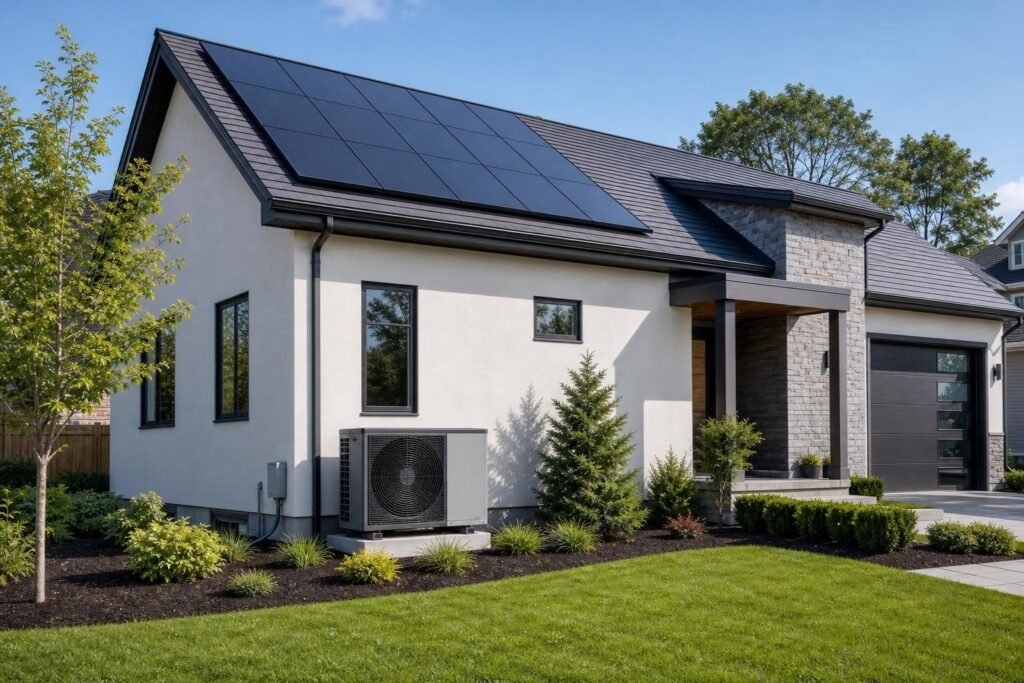
While an $8,000 furnace replacement might add $3,200 to $4,800 to the appraised value, the overall benefit extends to marketability and buyer appeal. In a market increasingly conscious of energy costs and environmental impact, a high-efficiency HVAC system is a significant selling point that appraisers will acknowledge.
Value Protection vs. Value Creation in Home Heating and Cooling Solutions
When considering home improvements, it’s crucial to distinguish between upgrades that primarily protect existing value and those that significantly create new value. While a kitchen or bathroom remodel often comes to mind for substantial value creation, HVAC upgrades typically fall more into the category of value protection and equity preservation.
Let’s compare. A kitchen remodel can add 50% to 80% of its cost back in appraised value, and a bathroom update can add 50% to 70%. These renovations often transform the aesthetic and functional appeal of a home, making it more desirable and commanding a higher price. In contrast, HVAC replacement typically recoups 40% to 60% of its cost in added home value. While still a respectable return, it highlights a different role in the appraisal process.
The greater benefit of HVAC upgrades is often in avoiding a value reduction rather than dramatically increasing equity. A perfectly functional, albeit older, HVAC system won’t necessarily add significant value, but a failing or non-functional one will certainly subtract from it. Therefore, replacing an old, unreliable system is primarily about preserving the home’s existing value and ensuring its functional adequacy, which is critical for mortgage approvals and maintaining borrowing power for things like HELOCs.
We believe that HVAC replacement should be done for reliability and comfort rather than solely to maximize borrowing power or sale price. While a new system is a positive factor, its main contribution to an appraisal is often preventing negative adjustments due to deferred maintenance or functional obsolescence. It ensures the home meets modern expectations for comfort and efficiency, which are foundational elements of a desirable property.
Key Red Flags That Lower Property Appraisals
Appraisers are trained to spot certain “red flags” in your home’s HVAC system that can significantly lower its property value. These indicators often point to potential problems, costly repairs, or outdated technology, all of which translate into financial risk for a buyer and, consequently, a reduced appraisal for you.
One major red flag is the presence of R-22 refrigerant in older air conditioning units. As of January 2020, the production and import of R-22 were banned in the United States, making it expensive and increasingly difficult to find for repairs. An AC unit still running on R-22 signals an older system that will soon require a full replacement if it ever needs a refrigerant recharge, leading to a negative appraisal adjustment.
Visible signs of distress are also critical. Excessive rust on the furnace, air conditioner coils, or the outdoor condenser unit suggests water damage, corrosion, or severe neglect. This can indicate structural integrity issues or impending mechanical failure. Similarly, evidence of poor maintenance, such as dirty filters, clogged coils, obstructed vents, or a generally unkempt appearance, tells an appraiser that the system has not been properly cared for, potentially shortening its lifespan and increasing the likelihood of breakdowns.
Regional climate factors also play a crucial role in how appraisers assess HVAC systems, particularly in Massachusetts. For instance, homes along the coast in areas like Norwell, MA, are exposed to salt air, which can accelerate corrosion on outdoor units. Appraisers in these regions are often more vigilant about rust and wear on exterior components. In areas with high humidity, issues like mold growth in ductwork or condensate drainage problems can be significant concerns. Extreme temperatures, common throughout Massachusetts, mean that the reliability and efficiency of both heating and cooling systems are paramount. An undersized or poorly performing system in such a climate could be a major red flag, as it fails to provide adequate comfort.
These red flags signal to the appraiser that the HVAC system is either at risk of failure, requires immediate significant investment, or is functionally obsolete, all of which lead to a lower appraised value for your home.
Preparing Your Home Comfort Systems for an Appraisal
Preparing your home’s comfort systems for an appraisal is about more than just ensuring they’re operational; it’s about providing the appraiser with clear evidence of their condition, efficiency, and any recent improvements. While routine maintenance alone won’t dramatically alter an appraisal outcome, presenting a well-maintained, documented system can certainly help maximize credit and avoid negative adjustments.
The most crucial step is to gather comprehensive documentation. This includes:
- Invoices and Receipts: Keep paid invoices for any new installations, major repairs, or component replacements. These should clearly state the model numbers, installation dates (current date: July 2026), and the scope of work performed.
- Municipal Permits: If a new HVAC system was installed, ensure you have copies of any required municipal permits. This verifies that the work was done to code and inspected by local authorities.
- Service Records: Maintain a history of routine maintenance and service visits. This demonstrates proactive care and can assure the appraiser that the system is well-maintained.
- Manufacturer Warranties: If your system or its components are still under warranty, provide this documentation. It adds an extra layer of assurance regarding future reliability.
- Efficiency Ratings: For newer or high-efficiency systems, record and provide the SEER2, HSPF2, or AFUE ratings. These specific numbers can justify positive adjustments from the appraiser.
While an appraiser won’t typically spend hours reviewing these documents, having them neatly organized and readily available shows a conscientious homeowner and provides verifiable facts. It helps the appraiser understand the true value and condition of your system, rather than making assumptions based solely on visual inspection.
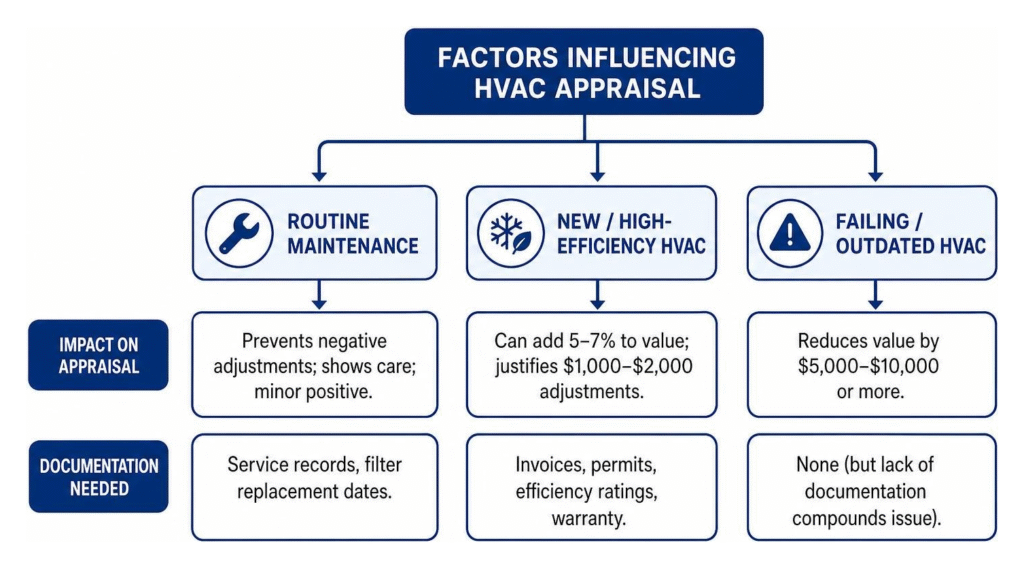
Regarding the impact of maintenance versus major upgrades, consider this comparison:
Feature Impact on Appraisal (General) Documentation Needed Routine Maintenance Prevents negative adjustments; shows care; minor positive. Service records, filter replacement dates. New/High-Efficiency HVAC Can add 5-7% to value; justifies $1,000-$2,000 adjustments. Invoices, permits, efficiency ratings, warranty. Failing/Outdated HVAC Reduces value by $5,000-$10,000 or more. None (but lack of documentation compounds issue). It’s always a best practice to ensure your system is clean and fully operational before the appraiser arrives. A clean system, with clear access to the units and visible evidence of recent service, can make a positive impression. While a recent service visit won’t magically add thousands to your appraisal, it can certainly prevent an appraiser from flagging the system as neglected or potentially problematic.
See also: Understanding Business Loan Options for Entrepreneurs
Frequently Asked Questions about Appraisals and Home Systems
We understand that the connection between your home’s HVAC system and its appraised value can raise many questions. Here, we address some of the most common inquiries we receive from homeowners in Massachusetts.
Will a new heating and cooling system increase my HELOC limit?
A new heating and cooling system typically won’t dramatically increase your appraised value in a way that significantly boosts your Home Equity Line of Credit (HELOC) limit. While a new system is a valuable asset, its primary role in the context of an appraisal for a HELOC is often to prevent a lower appraisal that would reduce your available equity. Most homeowners can expect to recoup about 40% to 60% of their HVAC investment in added home value. So, while it’s more about equity protection than massive equity creation, ensuring your HVAC is in good working order is crucial for maximizing your borrowing power.
Can a non-functional system cause a mortgage or refinance denial?
A non-functional HVAC system alone will not typically cause an outright mortgage or refinance denial, but it can certainly complicate the process. Lenders require the property to meet certain functional adequacy standards. If the HVAC system is completely broken, it will significantly lower the home’s appraised value. This reduced value might mean the loan-to-value ratio is too high, or the property might not meet the lender’s minimum condition requirements. In such cases, the lender might require the system to be repaired or replaced before approving the loan, or they might offer a smaller loan amount. It’s best to address any non-functional systems before applying for a mortgage or refinance to avoid potential hurdles.
How does regional climate in Massachusetts affect appraisal evaluations?
Regional climate factors in Massachusetts significantly influence how appraisers assess HVAC systems. Our state experiences a wide range of temperatures, from hot, humid summers to bitterly cold winters, making both reliable heating and cooling essential.
- Humidity: High summer humidity, particularly in coastal areas, means that air conditioning systems are crucial for comfort and preventing moisture-related issues. Appraisers will look for systems capable of handling this, assessing their age and efficiency.
- Coastal Salt Air: Homes in coastal towns are exposed to salt air, which can accelerate corrosion on outdoor AC units and heat pumps. Appraisers in these regions are often more attuned to visible rust and wear, potentially flagging systems showing significant deterioration sooner than in inland areas.
- Extreme Temperatures: The need for robust heating in winter and effective cooling in summer means that the capacity and reliability of both components are paramount. An undersized or inefficient system that struggles to maintain comfortable indoor temperatures in extreme weather will be viewed negatively.
Essentially, in Massachusetts, a fully functional, appropriately sized, and well-maintained HVAC system is not just a luxury; it’s a fundamental necessity for year-round comfort and safety, and appraisers reflect this importance in their evaluations.
Conclusion
The journey of homeownership is filled with decisions, and understanding the impact of your Home Heating and Cooling Solutions on your property’s value is undeniably one of the most important. From Norwell to Natick and Quincy, Massachusetts homeowners can significantly influence their home’s appraisal by paying close attention to their HVAC system.
We’ve explored how appraisers meticulously evaluate age, condition, and functionality, often flagging older or neglected systems as deferred maintenance. We’ve seen that a failing system can reduce your home’s value by thousands, impacting everything from HELOC limits to mortgage approvals. Conversely, investing in new, high-efficiency systems can provide a respectable return on investment and, more importantly, protect your home’s existing equity.
While a sparkling new kitchen might create more “wow” factor, a reliable and efficient HVAC system forms the backbone of your home’s comfort and structural integrity. By maintaining thorough documentation, addressing red flags like R-22 refrigerant or excessive rust, and ensuring your system is in top operational condition, you are not just investing in comfort; you are proactively safeguarding and enhancing your property’s value. Proactive maintenance and thoughtful upgrades ensure your home remains a valuable asset, ready for any appraisal that comes its way.