Key Takeaways
- Shared fault can reduce compensation in a Florida car accident claim.
- Being more than 50% at fault may bar recovery in a typical negligence claim.
- Evidence such as photos, videos, witnesses, and crash reports can help establish fault.
- Prompt medical care and organized records can strengthen documentation.
- Avoid admitting fault or accepting a settlement before understanding the claim.
After a Casselberry car crash, more than one person may have contributed to what happened. A driver may have been speeding, while another may have changed lanes without checking a blind spot. In those situations, Florida’s modified comparative fault law can directly affect whether an injured person can recover compensation and how much may be available. Anyone evaluating a local collision claim can find additional context through this website.
Fault is not always determined by a single fact, a traffic ticket, or one driver’s statement at the scene. Insurance companies examine the evidence and may argue that an injured driver was partly responsible. Understanding how that argument can change a claim helps crash victims preserve evidence, communicate carefully, and avoid accepting an unfair percentage of blame.
Florida’s Modified Comparative Fault Rule
As of August 24, 2026, Florida generally follows a modified comparative fault system for negligence claims. Under Florida’s comparative fault statute, an injured person who is more than 50 percent responsible for an accident generally cannot recover damages from another at-fault party. If the injured person is 50 percent or less at fault, recovery may still be available, but it is reduced by that person’s assigned percentage of fault. This is a meaningful change from a pure comparative-fault approach, where an injured person could recover something even if they were mostly responsible. In a typical Casselberry vehicle collision, the central question is whether the claimant’s share of fault is 50 percent or less, not whether the claimant was completely blameless.
Fault Must Be Based on Facts
Insurance adjusters may cite conduct such as speeding, following too closely, being distracted, failing to use a turn signal, or entering an intersection after the light changed. However, an allegation is not proof. The circumstances of the crash, the roadway layout, witness accounts, vehicle damage, video footage, and other records all matter when deciding whether a driver actually contributed to the collision.
How Shared Fault Changes Damages
When a claimant is partly at fault but not more than 50 percent at fault, the damages are reduced proportionally. For example, suppose total damages are $100,000, and the injured driver is found to be 20 percent responsible. The potential recovery would be reduced by $20,000, leaving $80,000 before considering insurance limits, policy terms, liens, or other claim-specific issues. On the other hand, if a claimant is found 51 percent responsible in an ordinary negligence case, the modified comparative fault rule generally prevents recovery from the other party. That makes disputed fault especially important. A small difference in the percentage assigned can substantially change the outcome.
Damages May Include More Than Vehicle Repairs
- Medical expenses related to crash injuries.
- Lost income and diminished earning ability.
- Vehicle repair or replacement costs.
- Out-of-pocket expenses, including towing and rental costs.
- Pain, suffering, disability, disfigurement, and loss of enjoyment of life when permitted by Florida law.
Evidence That Can Affect Fault
Because fault percentages can have a significant effect, evidence should be protected promptly. Vehicles are repaired, surveillance systems overwrite recordings, and memories fade. A person injured in a crash near State Road 436, U.S. 17-92, or a busy Casselberry intersection may benefit from preserving details before they disappear.
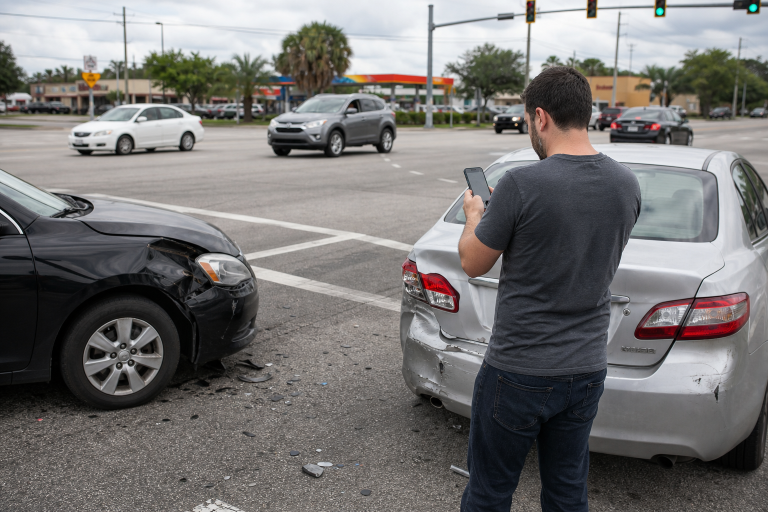
- Photographs of every vehicle, damage pattern, debris, skid marks, signals, and lane markings.
- Contact information for independent witnesses.
- Dashcam footage, phone photos, and available nearby business surveillance video.
- The crash report, while recognizing that it may not settle every fault question.
- Medical records that connect symptoms and treatment to the collision.
- Receipts, pay records, repair estimates, and a dated record of missed work or daily limitations.
A claimant should avoid guessing about speed, signal timing, or what another driver saw. It is also wise not to post opinions, photos, or comments about fault on social media while an insurance claim remains unresolved.
How PIP and Liability Claims Work Together
Florida’s personal injury protection, or PIP, coverage may provide an initial source of medical and wage-loss benefits regardless of who caused the accident, subject to coverage requirements and policy terms. Under Florida law, an injured person generally must receive initial services and care within 14 days after the crash to qualify for PIP medical benefits. The rules governing required personal injury protection benefits also place limits on what PIP may pay.
Comparative fault most often becomes critical when a person pursues a liability claim against another driver for losses beyond applicable no-fault benefits. Depending on the nature of the injury, a claimant may need to establish that Florida’s injury threshold is met before seeking certain non-economic damages. Serious injuries, permanent impairment, significant scarring, or death can raise issues beyond a routine property-damage claim.
Common Shared-Fault Scenarios
Rear-End Collision With a Sudden Stop
The rear driver is often blamed, but a case may require closer review if the front driver abruptly changed lanes, had nonworking brake lights, or stopped for reasons unrelated to traffic conditions.
Intersection and Left-Turn Crashes
A turning driver may face substantial fault, but the other driver’s speed, light status, visibility, or distracted driving can also be relevant. Video evidence is often valuable in these disputes.
Lane-Change and Merge Accidents
Both drivers may claim they had the right of way. Photos showing vehicle positions, witness statements, and dashcam recordings may clarify who moved first and whether either driver had a reasonable opportunity to avoid impact.
Steps to Protect a Casselberry Crash Claim
- Get medical attention promptly and follow treatment recommendations.
- Report the crash when required and obtain the report information.
- Save photos, videos, damaged property, medical bills, and insurance correspondence.
- Give factual information to insurers, but do not speculate or accept blame for uncertain facts.
- Review any settlement offer carefully before signing a release.
- Keep a simple timeline of treatment, symptoms, expenses, and missed work.
When Legal Guidance May Help
Not every crash requires legal representation. Still, guidance may be useful when fault is disputed, injuries are serious, multiple vehicles are involved, a commercial or rideshare driver was involved, the other motorist lacks adequate coverage, or an insurer argues that the injured person was mostly at fault. A review of the available evidence can help determine whether the facts support a proposed percentage of fault.
See also: Why Legal Representation Matters in Family Law Conflicts
Frequently Asked Questions
Can I recover compensation if I was partly at fault?
Possibly. In an ordinary Florida negligence claim, a claimant who is 50 percent or less at fault may seek damages reduced by that percentage of responsibility.
Does a traffic citation decide who was at fault?
No. A citation may be relevant, but it does not automatically resolve civil liability or establish the final fault percentages in an insurance claim or lawsuit.
Should I accept an insurer’s first fault determination?
Not without reviewing the supporting evidence. Fault assessments can change when additional photos, video, witness information, vehicle data, or medical records become available.
Final Takeaway
Florida’s modified comparative fault law can reduce a Casselberry car crash recovery or, when a claimant is found more than 50 percent at fault, bar recovery in a typical negligence claim. Because fault can affect the amount a person may recover, it is important to preserve photographs, witness information, crash reports, medical records, and other evidence that may clarify what happened. Prompt medical care is also important when injuries or symptoms develop after a collision, even if they were not immediately obvious. Avoiding assumptions about fault, keeping communications with insurers factual, and reviewing settlement offers carefully can help protect both health and legal options while the circumstances of the crash are evaluated.