Categorizing Cosmetic and Aesthetic Treatments: Surgical vs. Non-Surgical
When considering cosmetic and aesthetic treatments, one of the first distinctions we encounter is between surgical and non-surgical procedures. This fundamental difference lies in the invasiveness of the treatment, the recovery time, and the extent of the changes achieved. Understanding these categories is crucial for setting realistic expectations and making informed choices about one’s aesthetic journey.
Surgical interventions involve making incisions, often require general anesthesia, and typically entail a more significant downtime. These procedures are designed for structural alteration, addressing deeper anatomical concerns, and often yielding dramatic, long-lasting results. In contrast, non-invasive techniques involve minimal to no incisions, usually require only topical or local anesthesia, and are characterized by shorter recovery periods. Their focus is generally on superficial enhancement or stimulating cellular turnover, offering more subtle yet effective improvements.
Surgical Facial and Body Procedures
Surgical cosmetic procedures are often chosen for more significant and permanent transformations. These treatments target underlying anatomical structures to reshape and redefine the body or face. Common surgical options include body contouring procedures like abdominoplasty (tummy tuck) or arm lifts, liposuction for targeted fat removal, and rhinoplasty (nose reshaping). Facial procedures such as facelifts, brow lifts, and eyelid surgery (blepharoplasty) also fall into this category, aiming to address signs of aging by tightening skin and underlying muscles.
These procedures typically involve longer recovery periods, ranging from several weeks to a few months, during which patients must follow strict aftercare instructions. The results are generally considered long-term, often lasting for many years or even decades, depending on the procedure and individual factors. For those seeking comprehensive transformations that address structural concerns, surgical options can be highly effective. If you’re exploring options for significant changes like those offered in facial rejuvenation and mommy makeovers, a consultation with a board-certified plastic surgeon is an essential first step to understand the possibilities and requirements.
Non-Surgical Cosmetic and Aesthetic Treatments
Non-surgical cosmetic and aesthetic treatments have become incredibly popular due to their minimal downtime and often immediate, albeit temporary, results. These procedures are ideal for individuals looking for subtle enhancements, skin rejuvenation, or addressing specific concerns without the commitment and recovery associated with surgery.
Many non-surgical treatments can be performed in a clinic setting with topical anesthesia, allowing patients to return to their daily activities quickly. Examples include injectable treatments like botulinum toxins and dermal fillers, various laser and light-based therapies, chemical peels, microdermabrasion, and radiofrequency (RF) microneedling. These methods work by stimulating cellular turnover, restoring volume, or improving skin texture and tone. For a deeper dive into the diverse range of non-invasive options available, exploring various aesthetic skin and body treatments can provide valuable insights into what might be suitable for your goals.
To further illustrate the differences, let’s consider a comparison:
Feature Surgical Procedures Non-Surgical Procedures Invasiveness Highly invasive (incisions, general anesthesia) Minimally invasive (injections, topical treatments) Downtime Significant (weeks to months) Minimal to none (hours to a few days) Results Dramatic, long-lasting, structural alteration Subtle, temporary (months to years), superficial enhancement Risks Higher (infection, scarring, anesthesia complications) Lower (bruising, swelling, temporary redness) Cost Generally higher Generally lower per session, but may require maintenance Example Facelift, Liposuction, Rhinoplasty Botox, Dermal Fillers, Laser Resurfacing Clinical Mechanics of Injectables and Energy-Based Solutions
Understanding how popular aesthetic treatments work at a clinical level can demystify the process and highlight their effectiveness. Many non-surgical options rely on sophisticated mechanisms, whether through muscle modulation, volume restoration, or targeted thermal ablation and dermal remodeling.
Botulinum Toxin and Dermal Fillers
Botulinum toxin, most famously known as BOTOX® Cosmetic, is a neuromuscular blocking agent. It works by temporarily inhibiting the release of acetylcholine, a neurotransmitter responsible for muscle contraction. When injected into specific muscles, it causes them to relax, smoothing out dynamic wrinkles that form from repetitive facial expressions, such as glabellar lines (frown lines between the eyebrows), lateral canthal lines (crow’s feet), and forehead lines. Clinical trials have shown significant efficacy; for instance, in studies for glabellar lines, 80% of BOTOX Cosmetic-treated subjects achieved a severity grade of none or mild at maximum frown at Day 30, compared to 3% for placebo. Similarly, for forehead lines, 61% of treated subjects saw a composite ≥2-grade improvement. The effects typically become visible within 1-2 days and reach full effectiveness around 14-30 days, lasting approximately 3 to 4 months. BOTOX Cosmetic units are specific to onabotulinumtoxinA and are not interchangeable with other botulinum toxin products. Potential adverse reactions, though generally mild and temporary, can include eyelid ptosis (3% for glabellar lines) or headache (9% for forehead lines).
Dermal fillers, on the other hand, primarily work through volume restoration. Most commonly, these are hyaluronic acid (HA) based gels, which are naturally occurring substances in the skin that attract and hold water. When injected, HA fillers plump up the skin, smooth out static wrinkles (those present even at rest), restore lost volume in areas like the cheeks or temples, and enhance features like the lips. Some fillers also stimulate the body’s natural collagen production over time, contributing to longer-lasting results. The longevity of dermal fillers varies depending on the product, injection site, and individual metabolism, typically ranging from 6 months to over a year.
Laser and Light-Based Technologies
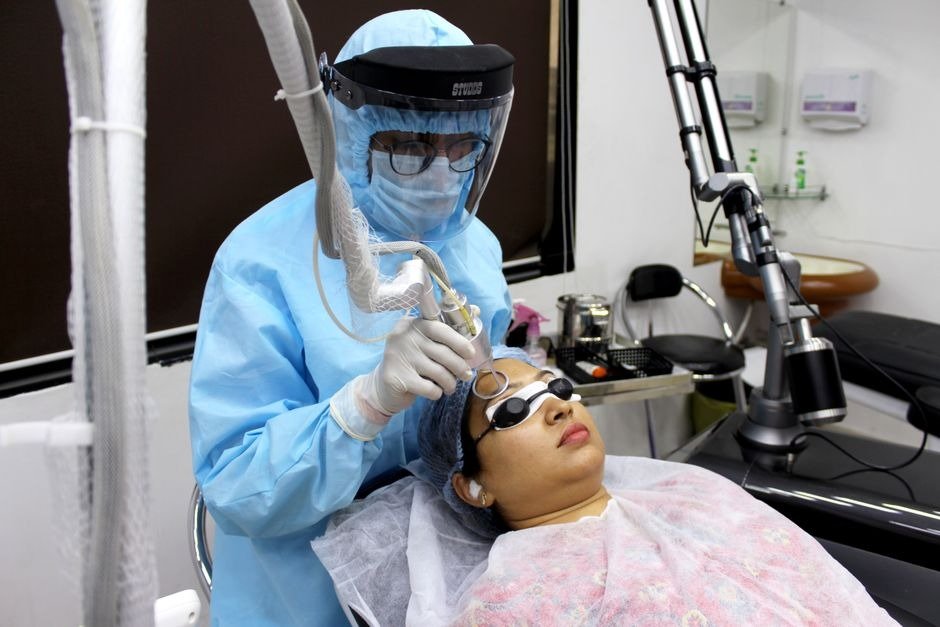
Laser and light-based technologies harness photothermal energy to address a wide range of skin concerns. These devices emit specific wavelengths of light that are absorbed by targeted chromophores (pigments) in the skin, such as melanin (for hair and dark spots), hemoglobin (for redness and vascular lesions), or water (for skin resurfacing).
For example, laser hair removal targets melanin in the hair follicles, heating and damaging them to inhibit future hair growth. Multiple sessions are typically required for permanent hair reduction. Tattoo removal lasers use ultra-short pulses of light to break down tattoo ink particles into smaller fragments that the body can then clear away. Different wavelengths are used for various ink colors. Scar remodeling and skin resurfacing treatments, such as fractional CO2 lasers, create microscopic channels in the skin. This controlled injury stimulates the body’s natural healing process, leading to new collagen production and the replacement of damaged skin cells with healthier, smoother tissue. This process of dermal remodeling can significantly diminish the appearance of scars, fine lines, and sun damage. When considering these treatments, understanding the specific technology and its interaction with your skin type is crucial for optimal results and safety.
See also: Why Legal Representation Matters in Family Law Conflicts
Patient Safety, Skin Nuances, and Provider Standards
Patient safety should always be the paramount concern in any cosmetic or aesthetic procedure. The perceived simplicity of many treatments can sometimes mask the deep medical knowledge and expertise required for safe and effective execution. This is where clinical oversight, medical governance, thorough patient assessment, and precise anatomical expertise become indispensable.
Selecting Board-Certified Dermatologists and Surgeons
Choosing the right practitioner is perhaps the most critical decision in your aesthetic journey. Cosmetic treatments, while often elective, are medical procedures that carry inherent risks. Safe execution demands an in-depth understanding of skin anatomy, physiology, and potential complications. This is why we strongly emphasize selecting a board-certified dermatologist or plastic surgeon.
Board certification signifies that a medical professional has completed rigorous training, passed comprehensive examinations, and maintains ongoing education in their specialty. These specialists possess the training required to perform treatments safely, effectively, and to manage any potential complications. For instance, board-certified dermatologists, who are medical doctors specializing in skin, hair, and nails, have a unique understanding of skin health and disease, making them exceptionally qualified for many aesthetic procedures. They are often considered the safest and most qualified medical professionals to perform cosmetic procedures because their expertise extends beyond aesthetics to the underlying medical science of the skin. If you are looking for comprehensive care, exploring medical and cosmetic dermatology services can connect you with highly qualified professionals.
Here are key credentials to verify when choosing a provider:
- Board Certification: Look for certification from recognized boards (e.g., American Board of Dermatology, American Board of Plastic Surgery).
- Medical Degree: Ensure the practitioner is a licensed Medical Doctor (MD) or Doctor of Osteopathic Medicine (DO).
- Specialized Training: Verify specific training and experience in the aesthetic procedures you are considering.
- Clinic Accreditation: Check if the clinic or medspa is accredited by relevant regulatory bodies, ensuring adherence to safety standards.
- Insurance and Malpractice: Confirm the practitioner carries appropriate medical malpractice insurance.
Safety Considerations for Cosmetic and Aesthetic Treatments
Beyond choosing a qualified professional, several other safety considerations are paramount. A thorough patient consultation is the cornerstone of safe practice. This involves a detailed medical history review, an assessment of your skin condition, and a frank discussion of your aesthetic goals and realistic outcomes.

One crucial aspect is recognizing skin tone variations. Individuals with darker skin tones, for example, have a higher concentration of melanin, which makes them more prone to post-inflammatory hyperpigmentation (PIH) or scarring with certain energy-based treatments. For these patients, treatments must utilize PIH-aware protocols, conservative energy parameters, and sometimes pre-conditioning regimens to minimize risks. A reputable clinic will always prioritize safety over sales, refusing treatment or referring patients elsewhere if a procedure is unlikely to produce beneficial outcomes or poses undue risk.
Clinic accreditation and strict hygienic protocols are also non-negotiable. Ensure the facility maintains a clean and sterile environment, uses single-use needles, and follows proper sterilization techniques for all equipment. Finally, understanding and adhering to aftercare protocols provided by your practitioner is vital for optimal healing and results, as well as minimizing complications.
Frequently Asked Questions About Aesthetic Procedures
We often receive many questions from individuals considering cosmetic and aesthetic treatments. Here, we address some of the most common inquiries to provide clarity and guide informed decision-making.
How long do the results of popular non-surgical treatments typically last?
The duration of results from non-surgical treatments varies significantly based on the type of procedure, the product used, the treated area, and individual patient factors like metabolism and lifestyle.
- Botulinum Toxin (e.g., BOTOX® Cosmetic): Results for treatments like frown lines, crow’s feet, and forehead lines typically last between 3 to 4 months. To maintain the desired effect, follow-up treatments are usually recommended around this timeframe.
- Dermal Fillers: The longevity of dermal fillers can range from 6 months to up to 18 months or even longer for certain types of fillers and areas (e.g., cheek augmentation vs. lip enhancement). Hyaluronic acid fillers are gradually absorbed by the body over time.
- Laser Hair Removal: While not truly “permanent,” laser hair removal offers permanent hair reduction. After a series of initial treatments (typically 6-8 sessions), most individuals experience a significant and lasting decrease in hair growth. Maintenance sessions might be needed periodically.
- Chemical Peels and Microdermabrasion: These treatments provide temporary improvements in skin texture and tone by promoting cellular turnover. Results are immediate but require regular maintenance sessions (e.g., monthly or quarterly) to sustain the benefits.
- RF Microneedling and Laser Resurfacing: These treatments stimulate collagen production, leading to gradual improvements over several months. Results can last for a year or more, but annual maintenance or touch-up treatments may be recommended to optimize longevity.
What specific factors should individuals with darker skin tones consider before laser treatments?
Individuals with darker skin tones have unique considerations for laser treatments due to the higher concentration of melanin in their skin. Melanin absorbs laser energy, which can lead to complications if not properly managed.
- Risk of Post-Inflammatory Hyperpigmentation (PIH): Darker skin types are more susceptible to PIH, where the skin produces excess pigment in response to inflammation or injury, leading to dark spots.
- Wavelength Selection: Not all lasers are suitable for darker skin. Lasers with longer wavelengths, such as Nd:YAG (1064nm), are generally safer as they bypass the superficial melanin and target deeper structures with less risk of epidermal damage.
- Conservative Energy Settings: Practitioners must use lower, more conservative energy settings and often more passes to achieve results safely, rather than aggressive settings that could cause burns or PIH.
- Pre- and Post-Treatment Care: Pre-conditioning the skin with topical agents (e.g., hydroquinone, retinoids) and meticulous post-treatment care (strict sun protection, anti-inflammatory creams) are crucial to prevent complications.
- Patch Testing: A test patch on an inconspicuous area of skin is often recommended before a full treatment to assess the skin’s reaction to the laser.
- Experienced Practitioner: It is paramount to choose a practitioner with extensive experience and expertise in treating diverse skin tones, as their knowledge is key to selecting the appropriate laser, settings, and aftercare protocols.
What are the essential signs of a safe and reputable aesthetic clinic?
Identifying a safe and reputable aesthetic clinic is crucial for your well-being and the success of your treatments. Here are the essential signs we look for:
- Physician Oversight and Medical Governance: A reputable clinic will have clear medical oversight, ideally with a board-certified physician (dermatologist or plastic surgeon) actively involved in patient consultations, treatment planning, and supervision of all procedures. Clinical decision-making should never be delegated solely to non-medical staff.
- Regulatory Compliance: Check for relevant accreditations or registrations from local or national regulatory bodies (e.g., CQC registration in the UK). This indicates adherence to strict safety and quality standards.
- Transparent and Thorough Consent Process: The clinic should provide detailed information about the procedure, including potential benefits, risks, alternatives, expected downtime, and realistic outcomes. You should feel fully informed and never pressured into a treatment.
- Hygienic and Professional Environment: The clinic should be impeccably clean, organized, and adhere to strict sterilization protocols. All staff should maintain a professional demeanor.
- Personalized Consultation-First Approach: A good clinic will prioritize a comprehensive medical consultation before any treatment. They will assess your suitability, discuss your goals, and be willing to say “no” or refer you if a treatment is not appropriate or safe for you.
- Qualified and Experienced Staff: All practitioners, including nurses and aestheticians, should be properly licensed, certified, and experienced in the treatments they perform.
- Clear Pricing and No Hidden Costs: Transparent pricing for consultations, treatments, and follow-up care should be readily available.
- Positive Patient Feedback (with caution): While online reviews can be helpful, look for consistent themes of professionalism, safety, and good communication rather than just promises of “miracle” results.
Conclusion
The landscape of cosmetic and aesthetic treatments is continually evolving, offering an incredible array of options for those seeking to enhance their appearance and confidence. From the transformative power of surgical interventions to the subtle refinements of non-surgical techniques, the advancements we see today provide unprecedented personalization in aesthetic care.
However, with this breadth of choice comes the responsibility of informed decision-making. We have explored the clinical mechanics behind popular treatments like botulinum toxins, dermal fillers, and laser therapies, highlighting their specific actions and expected outcomes. Crucially, we’ve emphasized that the success and safety of any aesthetic procedure hinge not just on the technology, but profoundly on the expertise and ethical standards of the practitioner.
Choosing a board-certified dermatologist or plastic surgeon, understanding the nuances of your skin type, and ensuring the clinic adheres to the highest safety and regulatory standards are paramount. We encourage every individual to approach their aesthetic journey with careful consideration, prioritizing thorough medical consultation and realistic expectations. By arming ourselves with knowledge and making informed choices, we can navigate cosmetic and aesthetic treatments safely and effectively, leading to results that truly boost confidence and reflect our best selves.