Routine Garage Door Repair and Maintenance for Peak Performance
Maintaining your garage door goes beyond aesthetics; it’s about ensuring operational safety, extending the system’s lifespan, and preserving the integrity of its hardware. Whether you’ve opted for the classic elegance of a carriage style door or the clean lines of a standard door, a proactive approach to maintenance is paramount. Preventive care helps catch minor issues before they escalate into costly repairs, keeping your home’s exterior looking pristine and functioning flawlessly.
Monthly Visual Inspections and Balance Tests
Regular visual inspections are the first line of defense in maintaining your garage door. We recommend conducting a thorough check at least once a month. Begin by observing the door’s movement. Does it operate smoothly, or do you notice any jerking, grinding, or uneven travel? For both carriage style and standard doors, pay close attention to the tracks, rollers, and cables. Look for signs of wear, such as frayed cables, bent tracks, or rollers that appear to be sticking.
A critical component of this monthly routine is the balance test. A properly balanced garage door should be easy to lift manually and remain open at various heights without falling. To perform this, first, engage the manual release to disconnect the door from the opener. Then, carefully lift the door about halfway. If it doesn’t stay in place or if it feels excessively heavy, the springs may need adjustment. This balance is vital not only for the longevity of your opener but also for the safety of anyone using the door. An unbalanced door can put undue strain on the opener, leading to premature failure, and can pose a significant safety hazard.
For carriage style doors, also inspect the decorative elements like faux hinges, handles, and overlay panels for any looseness, damage, or fading. These details are central to their curb appeal and can detract from the overall look if neglected. Similarly, standard doors with raised panels should be checked for dents or dings that can compromise their appearance and structural integrity. Ensuring track alignment is also crucial; misaligned tracks can cause the door to bind or even come off, leading to extensive damage.
Cleaning and Lubricating Moving Hardware
The moving parts of your garage door system require regular lubrication to ensure quiet, smooth operation and prevent premature wear. We advise using a silicone-based spray lubricant or white lithium grease, specifically designed for garage door components. Focus on the rollers (excluding nylon rollers, which are self-lubricating), hinges, and bearing plates. These are the points of friction where metal meets metal, and proper lubrication significantly reduces strain on the opener and extends the life of these parts.
Clean the tracks before lubricating to remove any dirt, dust, or debris that can impede roller movement. A simple wipe-down with a damp cloth is usually sufficient. Avoid using grease on the tracks themselves, as it can attract more dirt and create a sticky residue. For carriage style doors, especially those with intricate overlay designs or decorative hardware, also clean these surfaces to prevent grime buildup that can dull their finish. The quiet operation achieved through proper lubrication is not just a comfort; it reflects a well-maintained home, contributing positively to its perceived value and curb appeal. A noisy, grinding garage door, regardless of its style, can immediately suggest neglect.
Seasonal Garage Door Repair and Maintenance Checklist
Different seasons bring different challenges for your garage door. A seasonal checklist helps address these specific needs, particularly concerning weatherstripping and the bottom seal.
Spring:
- Inspect weatherstripping: Check the rubber seal along the bottom of the door and the vinyl seals along the sides and top. Look for cracks, tears, or hardening. These seals are crucial for keeping out drafts, moisture, and pests.
- Test auto-reverse: Ensure the safety mechanisms are functioning correctly. Place a 2×4 board flat on the ground in the door’s path. The door should reverse upon contact.
- Clean photo eyes: Wipe down the safety sensors located a few inches off the ground on either side of the door. Dust and debris can obstruct the beam, preventing the door from closing.
Summer:
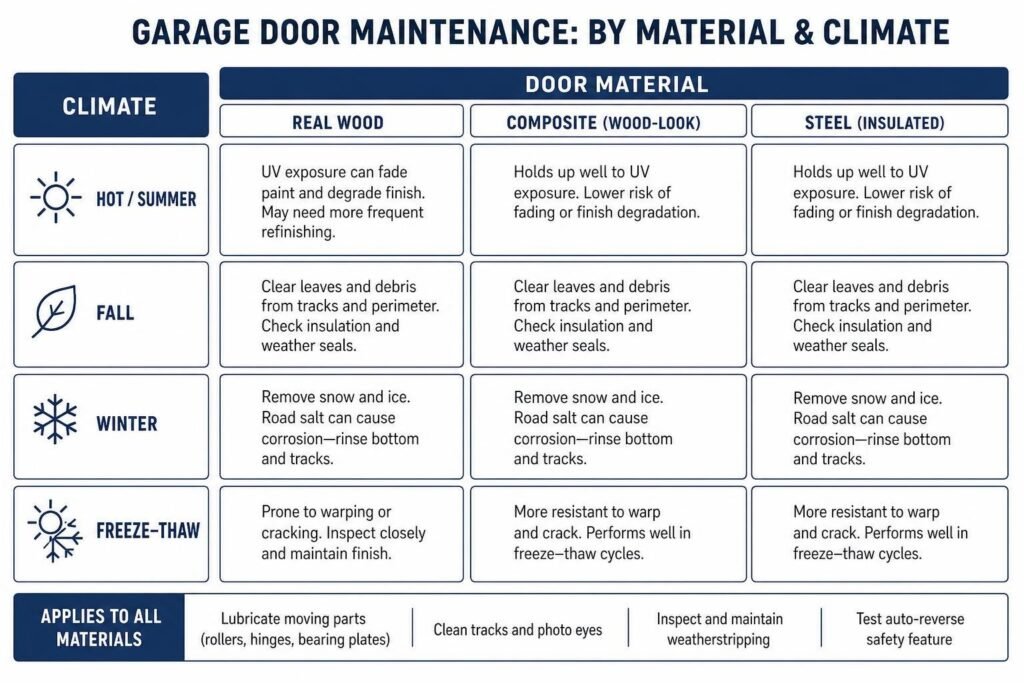
- Check for heat damage: Intense UV exposure, especially on south-facing doors, can cause paint to fade or wood finishes to degrade more quickly. For real wood carriage doors, this might mean more frequent refinishing. Composite or steel doors with wood-look finishes generally hold up better.
- Lubricate more frequently: Increased usage during warmer months may warrant more frequent lubrication of moving parts.
Fall:
- Inspect for debris: Clear leaves, twigs, and other debris from the tracks and around the door’s perimeter.
- Check insulation: If your garage is attached to living spaces, ensure your door’s insulation (R-value) is adequate. Both carriage and standard doors are available with excellent insulation, crucial for energy efficiency.
- Prepare for cold: Ensure all weather seals are intact to prevent cold air infiltration.
Winter:
- Clear snow and ice: Regularly remove snow and ice from the bottom of the door and the driveway path. Accumulation can freeze the door shut or damage the bottom seal and opener.
- Road salt vigilance: If you use road salt, be mindful of its corrosive effects on metal components. Rinse the bottom of the door and tracks periodically, especially for steel doors.
- Monitor for freeze-thaw damage: In climates with significant freeze-thaw cycles, real wood carriage doors can be prone to warping or cracking. Composite or insulated steel options in both styles offer greater resilience.
The diagram below illustrates how maintenance requirements can vary based on the material and climate, a key consideration whether you choose a carriage style or standard door.
Troubleshooting Common Garage Door Performance and Safety Issues
Even with diligent routine care, issues can arise. Knowing how to perform basic diagnostic checks can help you identify problems early, preventing motor strain and ensuring continued safety.
Sensor Alignment and Auto-Reverse Verification
The photoelectric eyes, or safety sensors, are arguably the most important safety feature of your garage door system. They are typically small boxes mounted a few inches off the ground on either side of the door opening. If these sensors are misaligned or obstructed, the door will not close, or it will reverse immediately upon attempting to close.
To verify their proper function, first, ensure the lenses are clean and free of cobwebs or debris. Then, check their alignment: there should be a small indicator light on each sensor. If one or both lights are off or blinking, it usually indicates a misalignment. Gently adjust the sensors until both lights are solid, indicating a clear beam path.
Next, perform the auto-reverse test monthly. As mentioned in our seasonal checklist, place a solid object (like a 2×4 board) flat on the garage floor directly in the door’s path. When the door attempts to close and encounters the object, it should immediately reverse direction and open fully. If it doesn’t, or if it struggles to reverse, the system requires professional attention immediately. This is a critical safety regulation designed to prevent serious injury or damage, and it applies equally to all modern garage doors, whether they are carriage style or standard.
Addressing Noisy Operation and Track Misalignment
A noisy garage door is not just an annoyance; it’s often a symptom of underlying issues that, if left unaddressed, can lead to more significant problems. Common culprits include dry rollers, loose bolts, or misaligned tracks.
If lubrication doesn’t resolve the noise, inspect the tracks for any bends or obstructions. Use a level to check that the vertical and horizontal tracks are plumb and level, respectively. Loose bolts on the track brackets can also cause rattling and instability; tighten any you find. Worn-out rollers, especially steel ones, can become noisy and inefficient. Replacing them with quieter nylon rollers can make a significant difference.
For doors with an opener belt, check for proper tension. A loose belt can cause a flapping noise, while an overly tight one can strain the motor. Vibration dampening pads can also be installed between the opener and the ceiling to reduce noise transfer. Addressing these issues not only restores quiet operation but also ensures the door continues to glide smoothly, protecting both its mechanical components and its visual appeal. A smooth, quiet door enhances the overall impression of a well-maintained home, regardless of whether it’s a rustic carriage style or a contemporary standard design.
Knowing When to Call for Professional Service
While routine maintenance empowers homeowners, some garage door repairs are inherently complex and dangerous, requiring the expertise of a professional. Attempting these repairs yourself can lead to severe injury, further damage to your door, or even void existing warranties.
High-Tension Spring and Cable Safety Risks
The torsion and extension springs on your garage door are under extreme tension, designed to counterbalance the door’s significant weight. This tension makes them incredibly dangerous if mishandled. A sudden spring failure can release a tremendous amount of force, causing severe injury or even death. Similarly, cables, which are integral to the spring system, can fray or snap under tension.
If you notice a broken spring (often characterized by a loud “bang” and the door becoming incredibly heavy), or if cables appear frayed or have come off their drums, do not attempt to repair them yourself. These components require specialized tools and training to safely adjust or replace. Professional technicians are equipped to handle these high-tension parts, ensuring the repair is done correctly and safely. When dealing with such critical components, it’s always best to consult with an expert garage door repair service to ensure safety and proper functionality.
DIY vs. Professional Garage Door Repair and Maintenance
Deciding when to tackle a repair yourself versus calling a professional often comes down to safety, complexity, and specialized knowledge.
DIY-Friendly Tasks:
- Lubrication: Applying lubricant to moving parts.
- Cleaning: Wiping down tracks, sensors, and door panels.
- Visual Inspections: Checking for obvious signs of wear or damage.
- Sensor Alignment: Gently adjusting misaligned safety sensors.
- Weather Seal Replacement: Replacing worn bottom or perimeter seals (though professional installation ensures a perfect fit).
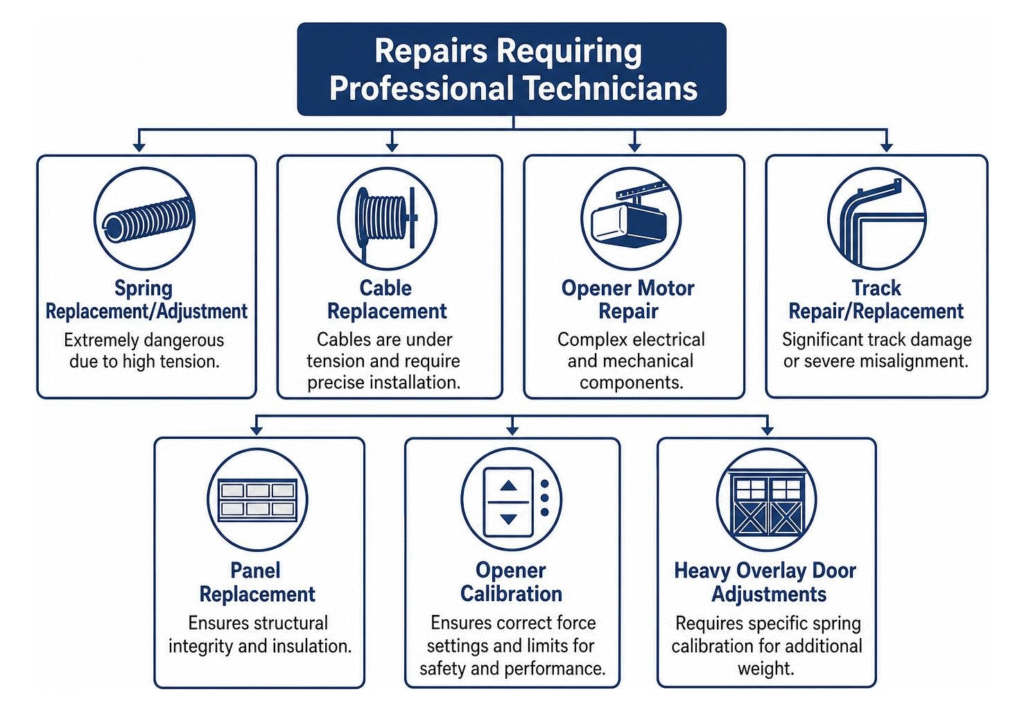
Repairs Requiring Professional Technicians:
- Spring Replacement/Adjustment: As discussed, these are extremely dangerous due to high tension.
- Cable Replacement: Cables are under tension and require precise installation.
- Opener Motor Repair: Complex electrical and mechanical components.
- Track Repair/Replacement: Significant track damage or severe misalignment.
- Panel Replacement: Especially for multi-layer carriage doors or insulated standard doors, proper panel replacement ensures structural integrity and insulation.
- Opener Calibration: Ensuring the opener’s force settings and limits are correctly adjusted for optimal performance and safety.
- Heavy Overlay Door Adjustments: Carriage style doors with heavy composite overlays require specific spring calibration to handle the additional weight.
Annual professional tune-ups are highly recommended, regardless of your door style. During these visits, technicians can perform comprehensive safety checks, fine-tune mechanical components, and address any potential issues before they become major problems. This proactive approach not only safeguards your investment but also ensures the continuous curb appeal of your home, whether it features a charming carriage door or a sleek standard design.
Frequently Asked Questions about Garage Door Maintenance
Homeowners often have similar questions regarding the best practices for garage door maintenance. Addressing these common inquiries can help clarify routine troubleshooting and maintenance schedules.
How often should garage door springs and moving hardware be lubricated?
For optimal performance and longevity, we generally recommend lubricating garage door springs and all moving hardware (hinges, rollers, bearing plates) at least twice a year. However, if your garage door is used frequently (multiple times a day) or if you live in a climate with extreme temperatures or high humidity, more frequent lubrication—perhaps quarterly—might be beneficial.
It’s crucial to use the right type of lubricant: a silicone-based spray or white lithium grease is ideal. Avoid using WD-40 or similar penetrating oils, as they are not designed for long-term lubrication and can attract dirt, leading to more problems down the line. Nylon rollers are typically self-lubricating and should not be greased. Proper lubrication ensures quiet operation, reduces wear and tear on components, and extends the lifespan of your entire garage door system, maintaining the pristine look of both carriage style and standard doors.
What R-value and weather seals are best for climate protection?
The ideal R-value for your garage door largely depends on whether your garage is attached to your home, if it’s heated, and your local climate. For attached garages or those with living spaces above them, we recommend a door with a higher R-value, typically R-12 to R-18 or higher. Polyurethane insulation, injected into the door’s core, generally offers superior thermal efficiency (higher R-value per inch) compared to polystyrene, providing a better thermal barrier against heat transfer. This is crucial for maintaining energy efficiency and comfort within your home, especially during harsh winters or hot summers. Both carriage style and standard doors are available with excellent insulation options.
Beyond insulation, high-quality perimeter weatherstripping is essential. This includes the bottom seal (often rubber or vinyl), as well as the seals along the sides and top of the door frame. These seals prevent drafts, moisture, and pests from entering the garage. In colder climates, ensuring these seals are pliable and intact is paramount to preventing energy loss and protecting the garage’s interior from the elements. Regularly inspect them for cracks, tears, or hardening, and replace them as needed to maintain an effective seal.
How do I know if my garage door is properly balanced?
A properly balanced garage door is fundamental to its smooth operation and the longevity of your opener. The easiest way to check for proper balance is to perform a simple test:
- Disconnect the opener: Pull the emergency release cord (usually a red handle) to disengage the garage door from the automatic opener.
- Manually lift the door: Carefully lift the door about halfway up.
- Observe: A properly balanced door should stay in this position without falling or rising further. If the door drifts down, it indicates the springs are too loose and need to be tightened. If it springs upward, the springs are too tight and need to be loosened.
An unbalanced door forces your opener to work harder, leading to premature wear and potential failure. It also poses a safety risk, as the door could fall unexpectedly. Spring calibration is a precise and dangerous task that should always be performed by a qualified professional. Whether you have a lightweight standard door or a heavier carriage style door with decorative overlays, ensuring proper balance is a non-negotiable aspect of garage door maintenance.
See also: Why Legal Representation Matters in Family Law Conflicts
Conclusion
The choice between carriage style vs. standard door curb appeal is a significant one, impacting your home’s aesthetic and value. However, regardless of the style you choose, consistent garage door repair and maintenance are the bedrock of preserving that curb appeal, ensuring long-term durability, and guaranteeing property safety. From monthly visual inspections and lubrication to seasonal checks and understanding when to call a professional, proactive upkeep extends the life of your door and prevents minor issues from escalating.
A well-maintained garage door operates smoothly, quietly, and safely, reflecting positively on your entire property. It’s an investment that pays dividends in both functionality and visual appeal, safeguarding your home’s first impression for years to come.