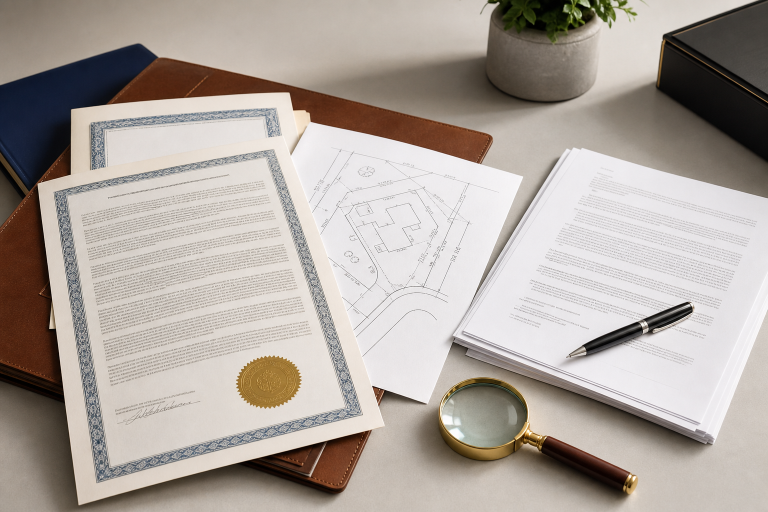
Key Takeaways
- Property records can reveal ownership questions, unpaid claims, recorded restrictions, and paperwork gaps that may affect a purchase.
- Reviewing documents before the closing appointment gives buyers more time to ask questions and request corrections.
- A home inspection and a title or record review address different risks, so neither replaces the other.
- Not every issue ends a transaction, but unclear documents should be resolved or explained before signing.
- Local recording practices, state law, and the purchase contract can affect the process.
Buying a home involves more than choosing a property, arranging financing, and reviewing an inspection report. The public record tells part of the property’s legal history, including prior transfers, mortgages, liens, and recorded rights that may affect the land. A careful review helps buyers spot details that deserve an answer before the paperwork becomes final.
For example, a buyer may learn shortly before closing that an earlier mortgage still appears in the record, even though the seller says it was paid years ago. That does not automatically mean the sale cannot close, but it does mean the buyer should understand how the item will be cleared. Reviewing the title work and considering an owners title insurance policy are separate but related steps in understanding ownership-related risk.
Why the Property Record Deserves Attention
Think of the property record as a timeline rather than a pile of legal jargon. It may show who owned the home, when ownership changed, whether lenders recorded security interests, and whether other parties have recorded claims or rights. Buyers do not need to become property-law experts, but they should be comfortable asking when names, dates, or property descriptions do not line up.
A record problem can be routine to fix. A lender may need to record a release after receiving payoff funds, or a clerical error may require a corrected document. Other matters, such as an unclear inheritance, disputed ownership, or uncertain access route, may require more time and legal guidance. The goal is not to expect trouble. It is to avoid accepting an unexplained problem.
Common Property Record Problems
Several issues appear often enough to deserve a buyer’s attention:
- Unreleased mortgages or liens: A prior loan, contractor claim, tax claim, or judgment may still appear as an open item.
- Tax or assessment questions: Records may show unpaid property taxes, special assessments, or amounts that must be prorated at closing.
- Name inconsistencies: A seller’s name may differ from the name on an earlier deed because of marriage, divorce, a misspelling, or a business entity.
- Incomplete transfers: Missing signatures, unrecorded documents, or unclear authority can complicate a transfer.
- Estate or trust ownership: The person signing may need documented authority to act for an estate, trust, or company.
- Boundary and access issues: Surveys, plats, restrictions, or recorded rights can affect how the property is used.
An easement can give another party a defined right to use part of the property, such as a driveway route or utility area. The existence of an easement is not necessarily negative, but a buyer should know its location, purpose, and practical effect before committing to plans for a fence, addition, garden, or outbuilding.
The Main Documents to Review
The exact package varies by transaction, but buyers commonly encounter the following documents:
- The current deed or vesting document: Identifies the current owner and describes how title is held.
- The preliminary title report or title commitment: Lists the ownership information and exceptions identified during the title search.
- Property tax records: Help confirm tax status, parcel information, and possible assessments.
- Mortgage payoff or release documents: Show how existing secured loans will be paid and released.
- Recorded liens, judgments, or notices: Identify claims that may need payoff, release, or further review.
- Survey, plat, easement, or boundary documents: Help explain the land, access, and recorded use rights.
- The purchase agreement and amendments: Set the parties’ obligations, deadlines, credits, and contingencies.
Compare the street address, legal description, parcel number, names, and dates across these documents. A street address alone may not be enough to identify the land accurately, especially where a parcel has unusual boundaries or a recent subdivision history.
A Simple Four-Step Record Review
1. Confirm the Property Identity
Match the address, legal description, and parcel or assessor number, when available, to the purchase agreement and title materials. Ask immediately if a description appears to cover a different lot, unit, parking space, or additional parcel.
2. Trace Recent Ownership
Review the recent chain of ownership for consistent names and logical transfer dates. A quitclaim deed, estate transfer, trust ownership, or corporate seller is not automatically a warning sign, but each may call for a closer look at signing authority and supporting documents.
3. Identify Unpaid Claims
Look for open mortgages, tax claims, contractor liens, judgments, and notices. Ask who will resolve each item, when it will be resolved, and whether written proof will be available. A verbal assurance that a debt was paid is not a substitute for the documentation needed to clear the record.
4. Read the Exceptions
Title materials often list easements, covenants, restrictions, leases, and other exceptions. Ask how each listed exception affects the buyer’s intended use. A standard-looking entry may still matter if it limits building locations, access, parking, rentals, or improvements.
How Record Review Fits Into the Closing Timeline
After a purchase agreement is signed, the lender, title or closing professional, insurer, and other parties begin collecting documents and preparing the transaction. Buyers should review each item as it arrives instead of saving every question for signing day. The closing process includes reviewing documents before closing, along with completing lender requests, inspections, insurance tasks, and final loan paperwork.
Waiting until the closing table can create unnecessary pressure. If a lien needs a payoff statement, a deed needs correction, or an estate document requires review, the people who can resolve the issue may not be available that day. A pause can protect the buyer without automatically canceling the transaction.
Questions to Ask Before Signing
- Who currently owns the property, and does that match the seller named in the contract?
- Are prior mortgages, liens, and judgments released or scheduled for payoff at closing?
- Are property taxes and assessments accounted for through the expected closing date?
- Which easements, restrictions, or other exceptions will remain after closing?
- Does the legal description match the property I agreed to buy?
- Has anything changed since the initial title search or closing estimate?
- Who can explain any ownership, deed, or signing authority question that remains unclear?
Keep Physical and Record Problems Separate
A home inspection focuses on the building’s condition, including systems such as the roof, plumbing, electrical components, foundation, and heating or cooling equipment. A record review focuses on legal ownership, recorded claims, and rights affecting the property. A home may have a new roof but an unresolved lien, or it may have a clean title history but serious structural concerns. Both reviews matter.
Review Charges and Know When to Pause
Compare the final Closing Disclosure with earlier loan figures and ask for an itemized explanation of unfamiliar title-related charges. Title service fees can include search, insurance, settlement, and related closing services, while customs about who pays may differ by location and contract.
Pause for answers if the seller’s name changes unexpectedly, a mortgage remains open without a payoff plan, the legal description differs from the contract, signing authority is uncertain, or someone pressures you to sign without adequate review. Keep written notes of questions, responses, promised corrections, and deadlines. For complicated ownership, estate, boundary, or restriction issues, qualified legal advice may be appropriate.
See also: Hard Water Home Care in 2026: Water Softeners, Scale Control, and Safe Maintenance
Final Pre-Closing Checklist
- Match the address, parcel details, and legal description.
- Review owner names, transfer dates, liens, taxes, and mortgage releases.
- Read all easements, restrictions, and exceptions.
- Compare final charges with earlier disclosures.
- Confirm what will be resolved before closing and what will remain.
- Save copies of signed closing documents and final title materials.
A thoughtful record review makes the closing process clearer and more manageable. The buyer’s job is not to solve every legal issue alone. It is to read carefully, ask direct questions, and avoid signing until the documents accurately reflect the property and transaction being purchased.