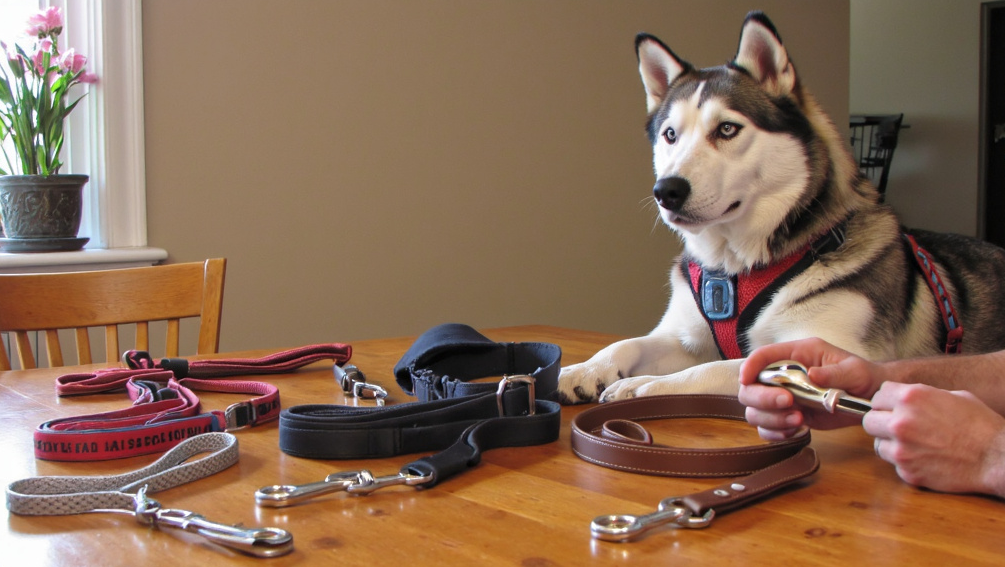
Successful dog training relies on clear communication. When you walk your dog, you are constantly sending physical signals through your hands. However, using mismatched or low-quality equipment muffles your message and delays those physical cues. A slight correction can easily get lost in the slack of a poorly made handle.
Handlers everywhere are recognizing the value of specialized tools. In fact, the global dog training equipment market is projected to reach USD 3.85 billion by 2030, with leashes and collars making up over 22% of that revenue. This growth highlights a massive shift. Dedicated owners are moving away from basic pet accessories and seeking professional-grade solutions.
Understanding how to pair specific leash materials with the correct collar mechanisms will elevate your training. It helps eliminate frustrating behaviors like pulling and sets a professional standard for your daily walks.
The Mechanics of Communication in Dog Training
Think of your leash and collar as an active, tactile communication line rather than just a physical restraint. They act as a telegraph wire directly connecting your hand to your dog’s neck. Every time you shift your weight, tighten your grip, or change your walking pace, that energy travels down the material.
Dogs are highly sensitive to even the most subtle shifts in handler movement and tension. They rely on these physical cues just as much as verbal commands to understand what you expect from them. If your gear absorbs or alters that energy, your dog misses the cue entirely.
“Pay attention to your behavior. Believe me, your dog is.” — Patricia B. McConnell, Ph.D.
Functionally, using a matching collar and leash set ensures smooth energy transfer. When the hardware and materials are designed to work together, there is no lag or snagging. Mismatched gear creates “static” that confuses the dog, leading to delayed responses and frustrating training sessions.
See also: Practical Financial Wellness Tips for Everyday Life
Overcoming the “Oppositional Reflex” with Proper Gear
Many handlers struggle with dogs that constantly pull or brace during training. This behavior is rarely an act of defiance. Instead, it is often the “oppositional reflex” in action. This is a dog’s natural, involuntary instinct to brace and pull against steady leash tension.
The type of gear you use directly influences this reflex. A study on leash pulling demonstrated that the specific restraint type used directly impacts the maximal and mean leash tension generated by dogs during walks. Bulky, poorly fitted, or mismatched equipment often creates a baseline level of tension that constantly triggers the dog to push forward.
Choosing matching dog collars and leashes comes down to knowing what your dog needs on any given day. A structured walk, a training session, or a turn in the show ring each call for different levels of control and comfort. When the collar and leash are built to work together, you spend less time managing equipment and more time focused on your dog. Start with your dog’s size and temperament and the right set will follow from there.
Material Matters: Choosing the Right Leash Grip
The handler’s grip is the starting point of clear communication. If your hand is slipping, your cues will be sloppy. Different leash materials offer distinct advantages and solve specific environmental handling challenges.
Nylon sets are incredibly popular for everyday handling. They are lightweight, easy to clean, and glide smoothly through your hands during foundational obedience work. On the other hand, braided leather provides a highly secure grip and unmatched strength. Leather naturally conforms to your hand over time, making it the preferred choice for managing heavy pullers or larger breeds.
For unique environments, specialty options provide practical safety solutions. Reflective anti-slip sets feature built-in rubberized textures that prevent the material from sliding through your hands in the rain. They also include high-visibility stitching for enhanced safety during early morning or late evening walks.
| Leash Material | Primary Benefit | Ideal Training Scenario |
|---|---|---|
| Nylon | Lightweight and easy to use | Everyday walking and foundational obedience |
| Braided Leather | Secure grip and natural strength | Managing heavy pullers and large breed dogs |
| Reflective Anti-Slip | No-slip texture and high visibility | Wet weather handling and low-light conditions |
Matching the Collar Mechanism to Your Training Goals
Which collar mechanism is most appropriate for your specific goals? The answer depends entirely on your dog’s current behavior and what you are trying to achieve. Choosing the right style ensures you are teaching, not just restraining.
Martingale collars are designed for secure, everyday handling. They feature a limited-slip loop that tightens just enough to prevent the dog from backing out of their gear. This makes them perfect for nervous rescues or breeds with narrow heads, offering safety without the risk of choking.
For more advanced obedience, slip collars and chain collars offer incredible precision. These mechanisms provide a swift, brief correction that immediately releases. However, they must be paired with the correct snap leash. A heavy leash clip on a lightweight chain will weigh the collar down, preventing it from releasing quickly and delivering unfair continuous pressure.
Carefully selecting these pairings is the gold standard of professional handling. When you match the appropriate collar’s action with the right leash’s grip, the tools work in perfect unison. You stop fighting the equipment and start truly training the dog.
Everyday Training vs. The Show Ring
As your dog advances, your goals will likely shift from building foundational obedience to presenting the dog professionally. Transitioning from the neighborhood sidewalk to the competition ring requires a very specific change in your equipment.
Everyday training gear focuses heavily on durability, a secure grip, and correcting behavioral issues. You need thick leather or sturdy nylon that can handle unpredictable squirrels and sudden lunges. The hardware is built for strength above all else.
Show ring gear serves an entirely different purpose. You will need items like ultra-slim slip collars and snake chains. These specialized tools are designed to blend seamlessly into the dog’s coat. They do not distract the judge’s eye, allowing the equipment to highlight the dog’s natural movement and anatomy.
Whether you are mastering heel work in the park or stacking your dog in the ring, reliable performance is non-negotiable. Both arenas require customized sizing and ultimate flexibility. A collar that is too loose in the show ring will disrupt the dog’s neckline, just as a flimsy leash in the park will ruin your control.
Conclusion
The right collar and leash pairing is a foundational training tool, not just a simple pet accessory. Your choice in equipment dictates how clearly your dog understands your instructions.
Taking the time to match tailored materials with specific collar mechanisms eliminates miscommunication. It reduces frustrating leash tension and prevents the instinctual oppositional reflex that ruins so many walks. When your gear works together effortlessly, your dog feels the difference immediately.
By adopting professional-grade, matched sets, handlers can confidently bridge the gap between casual walking and gold-standard obedience. Evaluate your current gear today, upgrade where necessary, and watch how quickly your dog responds to a clearer line of communication.