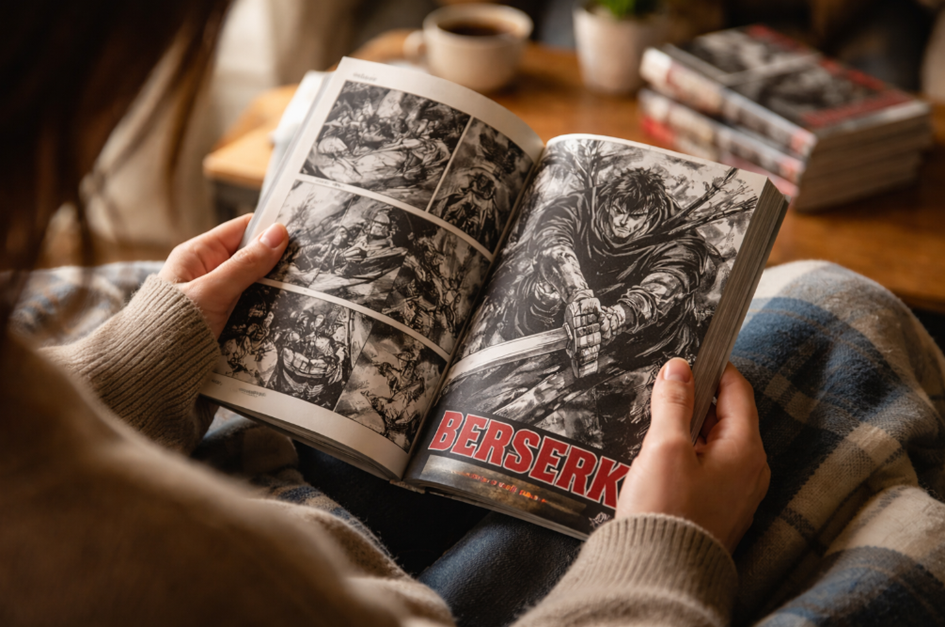
Few stories grip the soul like Berserk. This manga doesn’t just invite readers into a world of swords and monsters it drags them through a brutal saga of betrayal, ambition, and relentless struggle. With its complex characters and harrowing events, Berserk has become more than just a dark fantasy; it’s a visceral exploration of the human condition wrapped in blood-soaked armour and despair. For those just beginning their descent into the depths of Kentaro Miura’s masterpiece, understanding the timeline and emotional weight of the story is essential. Whether you’re drawn to the infamous Griffith betrayal, the tortured strength of Guts, or the dense philosophical themes, you’re not alone in wondering: What is the true story of Berserk? Berserk has garnered a global following, and its influence can be seen in everything from modern video games to high-end Berserk figures that collectors proudly display. But beyond the statues and swords lies a narrative that is both intimate and epic a story soaked in blood, but rich with meaning.
How does Berserk begin?
The story begins not with hope, but with rage. Guts, a lone mercenary with a prosthetic arm and a massive sword, cuts his way through enemies in a land plagued by war. He is not a hero. He is not a saviour. He is a man consumed by vengeance, cursed with a Brand of Sacrifice that attracts demons nightly, and hunted by creatures of darkness. But this bleak setting is only the surface. Early in the manga, readers are pulled into a long flashback known as the Golden Age arc a defining section of the story that chronicles Guts’ youth, his time in the Band of the Hawk, and his fateful relationship with Griffith. This arc is often considered one of the greatest in manga history, not just for its action, but for its layered storytelling and emotional depth.
As a child born from a corpse and raised on the battlefield, Guts never knew peace. His sword was his only comfort, and violence his only survival tactic. When he meets Griffith a charismatic, ambitious leader with a dream of ruling his own kingdom a strange bond forms. Guts joins the Band of the Hawk, and for the first time, he finds camaraderie, purpose, and something that resembles a future. During these years, the tone of Berserk shifts. There is friendship. Growth. Even love. It’s during this time that Guts meets Casca, a fellow warrior who becomes an emotional anchor in the storm that is his life.
Yet, beneath the surface, ambition brews. Griffith, driven by his dream, makes decisions that slowly unravel everything. His desire to rise, no matter the cost, sets the stage for betrayal on a scale that devastates the reader. In many ways, Berserk is less about battles and more about the scars they leave both physical and emotional. Even in its early stages, the manga speaks to the cost of ambition and the search for identity amidst chaos. As the story progresses, it never shies away from the grotesque, the unjust, or the heart-breaking.
Miura’s artwork and world-building are meticulously detailed, but it’s the psychological complexity of characters like Guts that draws people in. His struggles, his rage, and his moments of fragile vulnerability make him one of the most human protagonists in manga history. Those interested in capturing this essence often turn to anime figures as tokens of their connection to this world not just decorations, but symbols of a story that left its mark.
See also: Leveraging Technology for Efficient MEP and Electrical Estimating Services
What is the Golden Age arc and why is it crucial?
The Golden Age arc is the beating heart of Berserk not just in terms of plot, but in how it establishes the emotional foundation for everything that follows. It tells the story of Guts’ rise from a wandering sellsword to a commander within the Band of the Hawk, and his eventual betrayal.
Guts and Griffith: Brotherhood and rivalry
The dynamic between Guts and Griffith is layered, toxic, and strangely beautiful. Griffith sees Guts as more than a warrior he sees him as a kindred spirit, perhaps even a necessary piece of his ambition. But Guts is a free soul, unwilling to live in the shadow of another man’s dream. When Guts chooses to leave the Band to seek his own path, Griffith’s response is catastrophic. In a moment of weakness and desperation, Griffith sets into motion events that will destroy everything he built and damn himself in the process.
The Eclipse: A turning point in manga history
The Eclipse is perhaps the most infamous scene in Berserk a blood-soaked ritual where Griffith sacrifices his comrades to ascend as Femto, one of the demonic God Hand. It is trauma rendered in ink, an unforgettable sequence that transforms the story forever. Casca’s mind is shattered. Guts is left broken, physically and emotionally. And the tone of Berserk descends into the abyss. The manga becomes darker, more psychological, more philosophical and yet, strangely, more human.
- grief
- revenge
- madness
- survival
- destiny
These are no longer just themes they are the very air Guts breathes as he begins his journey anew.
What happens after the Eclipse?
The world of Berserk after the Eclipse is not merely darker it’s transformed. Guts, now marked by the Brand of Sacrifice, is relentlessly hunted by demonic beings known as apostles, drawn to his suffering like moths to flame. He becomes The Black Swordsman, a vengeful lone warrior wielding a massive slab of iron a sword in name, but more akin to a monument of rage. This new Guts is consumed by a singular purpose: revenge. His body is battered, his mind scarred, and his heart barely beating beneath the weight of his grief. He carries with him not only the trauma of betrayal but also the comatose Casca, whose sanity was stripped away during the Eclipse. Every night, demons descend upon them, forcing Guts into a perpetual cycle of violence and survival.
But Berserk is not just about vengeance. It’s also about resilience about the sliver of humanity that clings to purpose even when everything else burns. As Guts travels through corrupted villages, hellish landscapes, and cursed forests, he slowly gathers a new group of companions. Each of them bears wounds literal and emotional yet they bring something Guts has almost forgotten: connection. This shift in tone doesn’t make the story any lighter. If anything, it sharpens the emotional weight. Through characters like Farnese, Serpico, Isidro, and Schierke, readers explore the psychological echoes of trauma and the fragile pursuit of healing. Guts learns to fight not just for revenge, but to protect those who have chosen to stand beside him, despite the curse he carries.
One of the metaphors that best describes this part of the manga is that of a man walking through a hurricane while holding a candle. It flickers, nearly extinguished by the storm of his past, yet it burns on stubborn and defiant. Along the way, the manga unveils deeper elements: the Astral World, The Idea of Evil, and the God Hand. These aren’t just fantasy lore additions they’re philosophical pillars. Miura crafts a narrative that confronts destiny, existentialism, and the price of ambition in a crumbling world that mirrors our own fears and flaws. The rise of Griffith as the leader of a new holy empire under his demonic persona Femto, juxtaposed with Guts’ slow, painful attempt to retain his humanity, creates one of the most profound dichotomies in manga history.
What themes define Berserk’s narrative?
At its core, Berserk is a story about the tension between fate and free will. The question that haunts every character is whether their suffering is preordained or self-inflicted a philosophical battle that plays out through every sword swing and every moment of silence. The manga also dives deep into the trauma of war and abuse. Guts is the living embodiment of both, born into a world of blood and betrayal. His physical scars pale in comparison to the emotional ones. Yet, time and again, he resists the pull of nihilism. He questions, he suffers, but he fights not just monsters, but the darkness within.
The character arcs are rich with nuance. Griffith, for instance, is not a cardboard villain. He is magnetic, brilliant, and utterly convinced that his vision justifies every sacrifice. That includes the lives of his comrades. His transformation into Femto is both literal and metaphorical: the loss of humanity in the pursuit of godhood. Casca, too, represents a vital theme the cost of being broken, and the quiet, painful road toward reclaiming oneself. Her trauma is never minimised. Instead, it is explored with careful, unflinching honesty, reminding us that recovery is not linear, nor simple.
The visual storytelling in Berserk complements these themes. From sweeping battlefields to grotesque demon designs, the artwork acts as both stage and emotional backdrop. The manga doesn’t just depict darkness it makes you feel it. And that’s why it’s not merely violent for shock value. Every bloody panel carries narrative weight. If there is one enduring truth in Berserk, it’s that pain does not erase the possibility of meaning. That a man, even when stripped of everything, can choose to walk forward sword in hand, scarred but still alive.
Why is Berserk considered a masterpiece?
The label of “masterpiece” is not given lightly especially in a genre saturated with action and fantasy. What sets Berserk apart is its emotional sophistication. It’s a dark fantasy that doesn’t just show you monsters it forces you to question what truly makes a monster. From its masterful pacing to its unforgettable set pieces, Berserk is a symphony of tragedy, fury, and resilience. It’s a series that challenges readers to confront the darkest parts of existence, only to reveal sparks of light even in the pitch black.
Many long-time readers describe Berserk as an experience, not just a story. It’s the weight in your chest during the Eclipse. It’s the catharsis of watching Guts protect those who depend on him. It’s the ache of knowing that some wounds never close, and yet, somehow, life continues. Even unfinished, due to the untimely passing of Kentaro Miura, Berserk stands tall as a testament to what manga can achieve. It broke boundaries, challenged expectations, and earned its place among the greatest narratives ever drawn. For fans and newcomers alike, Berserk is more than just pages and panels. It’s a brutal poem, written in steel and sorrow, about what it means to survive.
A legacy carved in steel
The story of Berserk is not one you simply read it’s one you endure, absorb, and remember. It lingers like a scar: raw, real, and impossibly human. Whether you’re here to understand the plot, reflect on Guts’ journey, or dive into the intricate world of Midland and beyond, this manga offers something rare a deep, emotional connection with pain, purpose, and perseverance. If you’ve made it this far, chances are the world of Berserk has already left its mark on you. What does Guts’ story mean to you? Which moment hit hardest? Share your thoughts because Berserk is a story best remembered together.