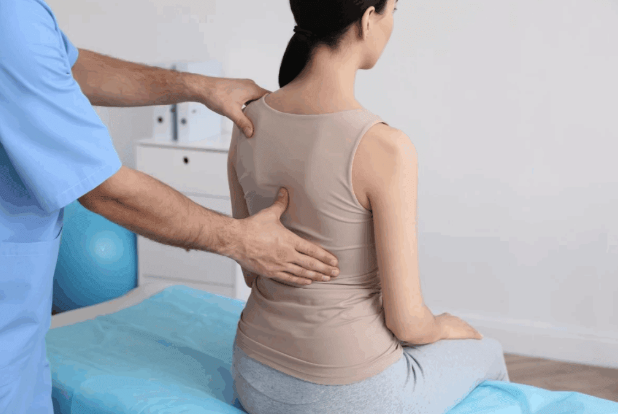
Have you ever found yourself changing how you sit, stand, or move – because it feels less painful even if you weren’t sure why?
That is often how scoliosis begins to surface. Not through sudden pain or obvious spinal curves, but through these unhealthy changes in posture and balance that start to create strain.
When that happens, monitoring alone is no longer enough – that is the time you should go for Scoliosis Therapy in Brampton, On.
Let’s look closely at the clinical signs that indicate when scoliosis therapy should begin.
7 Signs You Need Scoliosis Therapy in Brampton, On
Many patients think Scoliosis is just a curve on an X-ray that can be treated with one or two exercises. But this is not the case.
It’s a condition that changes how your spine, muscles, and posture work every day.
This is why, catching it early can make therapy far more effective, before your body develops habits that are hard to reverse.
Here are some small changes that are easy to miss but shouldn’t be ignored:
Visible Postural Asymmetry That Persists
One of the earliest and most overlooked indicators is persistent asymmetry. This is not about posture on a single day but about patterns that do not self-correct.
Common findings include:
- Uneven shoulder height
- One hip appearing higher or more prominent
- A visible waistline discrepancy
- Clothing hanging unevenly
Important Note: Persistent asymmetry that appears across standing, walking, and seated positions usually indicates a structural imbalance rather than just muscular tightness. Such consistent asymmetry often reflects underlying spinal rotation, which is an important sign that targeted therapy should be considered.
Rib Hump or Spinal Prominence on Forward Bending
When someone bends forward (Adam’s forward bend test) and you notice a rib sticking out or a bump in the lower back, it’s not just a sideways curve – the spine is actually twisting.
This twist (rotation) puts extra pressure on:
- The small joints in your spine (facet joints)
- The discs between your vertebrae
- The muscles along your spine
Over time, this can make the curve worse and cause discomfort.
Are You Aware?Research in Spine Deformity shows that when the spine rotates, scoliosis is more likely to get worse over time. Catching rotation early means scoliosis-specific therapy works better than trying to start later, after the spine becomes stiff.
Persistent One Sided Pain
Pain from scoliosis usually isn’t the same on both sides. Most patients notice it more on one side of the spine, shoulder, or pelvis.
This can happen due to these reasons:
- Uneven load on the spine – one side bears more weight.
- Overworked muscles – muscles on the inward curve (concave side) work harder.
- Joint stress – joints on the outward curve (convex side) get compressed.
Important: If pain continues even after rest or general exercise, it often means the spine is struggling to balance itself. This is usually the point when targeted Scoliosis Therapy in Brampton, On is needed to prevent chronic pain and improve function.
Progressive Fatigue and Reduced Endurance
Many people with scoliosis don’t feel pain at first, but they often notice getting tired quickly during long periods of sitting, standing, or walking.
Why it happens:
Scoliosis changes the way the body uses postural muscles. Over time, some muscles have to work much harder to keep the body balanced, which leads to early fatigue.
Did You Know? Research shows that people with untreated scoliosis burn more energy just to stand or sit compared to those with a straight spine.
Breathing Changes or Reduced Exercise Tolerance
Thoracic scoliosis can subtly impair rib cage mobility, affecting breathing mechanics even before lung tests detect any problem. A research even showed a significant correlation between spinal deformity and altered breathing function. This means scoliosis can impair respiratory mechanics.
Signs include:
- Shortness of breath during mild exertion
- Difficulty taking deep breaths on one side
- Reduced stamina during cardiovascular activity
Documented Curve Progression on Imaging
One of the most definitive signs that you need Scoliosis Therapy in Ontario is documented progression on X-rays or other imaging. Even small changes over time – especially in adolescents or adults with degenerative scoliosis – indicate the spine is structurally changing rather than just adjusting temporarily.
See also: How Seasonal Changes Affect Tree Health in North Mississippi
What to look for:
| Finding | What it Means |
| Increase in Cobb angle | The spinal curve is getting larger – structural progression is occurring |
| Increased vertebral rotation | Higher risk of stiffness, pain, and rib cage changes |
| Loss of spinal flexibility | Spine may respond less to passive care like general exercise or stretching |
Takeaway:
Even a small increase in curve or rotation is a signal that targeted scoliosis therapy should begin rather than just observing the spine. However, early intervention can slow progression, reduce pain risk, and maintain flexibility.
- Declining Balance or Coordination
Sometimes, problems with balance, walking, or coordination are ignored. But these can happen because the spine is uneven, like in scoliosis.
And when the spine is out of alignment, the nervous system works harder to keep the body upright.
Over time, this can cause:
- Higher risk of falls
- Uneven steps
- Trouble turning or changing direction
This is why therapy that helps the muscles and nervous system work together is so important.
When These Signs Appear Together
One sign alone may not demand immediate Scoliosis Therapy in Ontario. However, when multiple signs coexist, the spine is signaling reduced adaptability.
That’s why, clinics that specialize in scoliosis focused care, such as Dr Sandhar Wellness, emphasize early identification of these combined markers to intervene before degeneration accelerates.
Final Thought
Scoliosis Therapy in Brampton, On is not about reacting to severe pain or advanced curvature; it is about responding intelligently to early, meaningful signs the body is already providing.
If you or someone you care for is noticing early signs of scoliosis progression, book a consultation now to take a timely, expert led assessment.